Events:
Cherry Blossom Forecast 2026
https://www.japan-guide.com/sakura/
https://n-kishou.com/corp/news-contents/sakura/?lang=en
https://sakura.weathermap.jp/ (Japanese version only)
https://tenki.jp/sakura/expectation/ (Japanese version only)
https://www.otenki.jp/sp/art/sakura/?pg=11 (Japanese version only)

when and where to see fall foliage(Japanese version only):
https://hanami.walkerplus.com/
https://sp.jorudan.co.jp/hanami/

Friday, July 31, 2015

Osorezan, border between this world and the underworld (1)


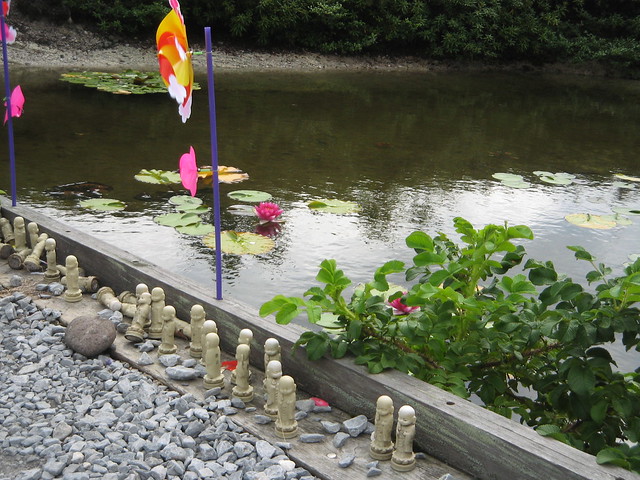
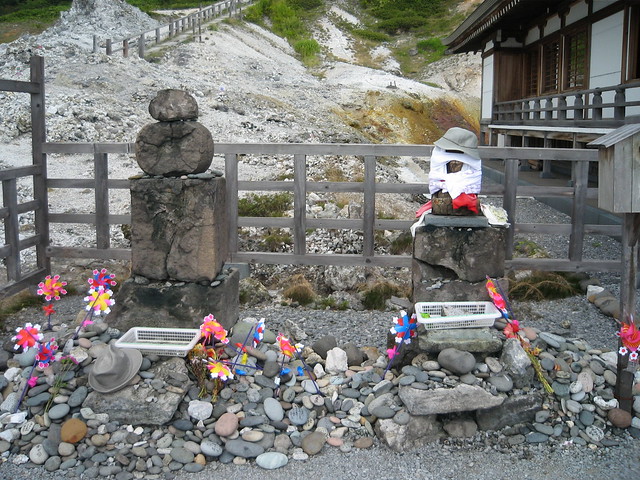
Pinwheels are offered to aborted and miscarried babies, deceased babies and infants as substitute for flowers. 
Some people say pinwheels symbolize a cycle of reincarnation.

photo by APTINET Aomori Sightseeing Guide


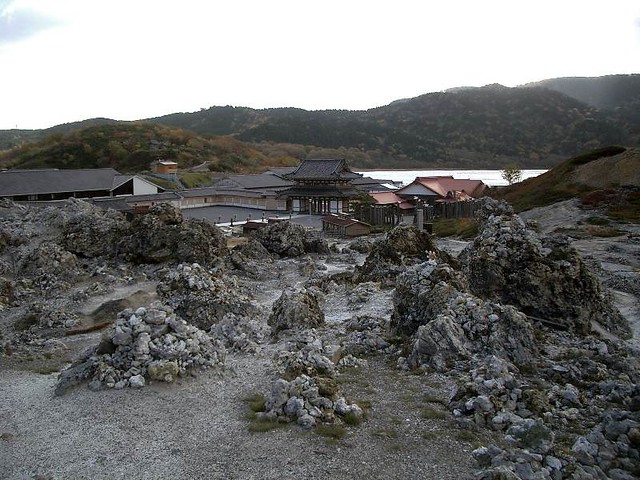
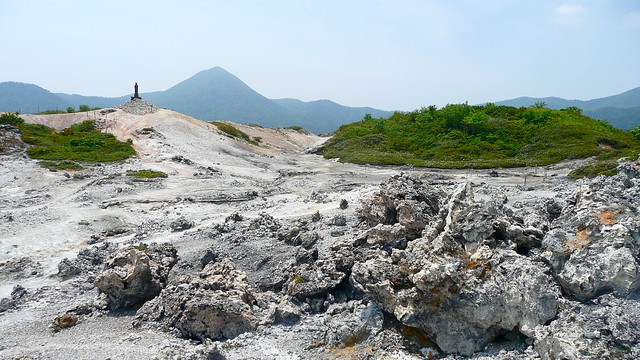
Osorezan(恐山, Mt. Osore), also known as Usoriyama, is a stratovolcano with a caldera lake(Lake Usori-ko) and hot springs located the centre of Shimokita Peninsula in Aomori Prefecture. Osorezan Taisai Festival(Osorezan Grand Festival) was held at Osorezan-Bodaiji temple(恐山菩提寺) located in Osorezan from July 20 to 24. The temple hold annual festivals in July and October. Tradition says buddhist monk Jikakutaishi established the temple in 862. Osorezan has been considered as a sacred ground.


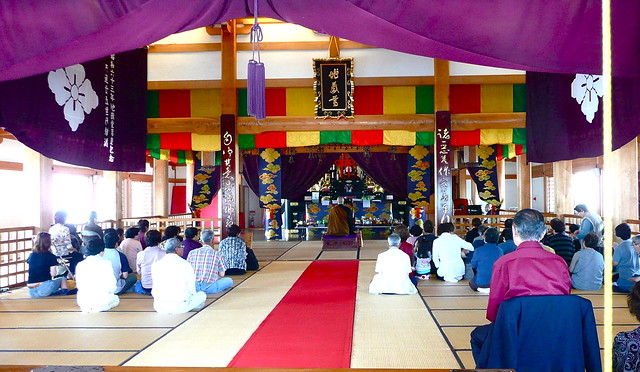
Osorezan Taisai Festival
photo by APTINET Aomori Sightseeing Guide

Osorezan Taisai Festival
photo by APTINET Aomori Sightseeing Guide


Osorezan Taisai Festival


Osorezan Taisai Festival
photo by APTINET Aomori Sightseeing Guide

worshippers


Osorezan Taisai Festival
photo by APTINET Aomori Sightseeing Guide


Through a ritual process known as "kuchiyose", blind mediums known as itako claim to communicate with the dead and deliver messages in their voices during annual festivals in July and October. Some poeple say they speak this region's dialect too fast and it's hard to catch words in it. Kuchiyose in the temple started after the WW2. The temple has no part in it.


Osorezan Taisai Festival


Osorezan Taisai Festival


Osorezan Taisai Festival


Taiko-bashi Bridge
photo by APTINET Aomori Sightseeing Guide

Taiko-bashi Bridge

The bridge is the entrance to the hallowed ground, Osorezan. But the bridge is a little way off the temple.
The Sanzu River(Sanzu-no-kawa), officially known as Shozu-gawa River(正津川),  is similar to the Styx. The bridge over the Sanzu River straddles the border between this world and the underworld. It is said the bad can't go over this bridge and visitors must not look back on the bridge on return route.


Taiko-bashi Bridge
photo by APTINET Aomori Sightseeing Guide


Somon Gate(front gate)
Osorezan is a sacred place, but it attracts a lot of tourists. There are a restaurant and a souvenir shop near its front gate. Tourists can take a taxi and many tour buses stop there.

Somon Gate, reception place,  souvenir shop
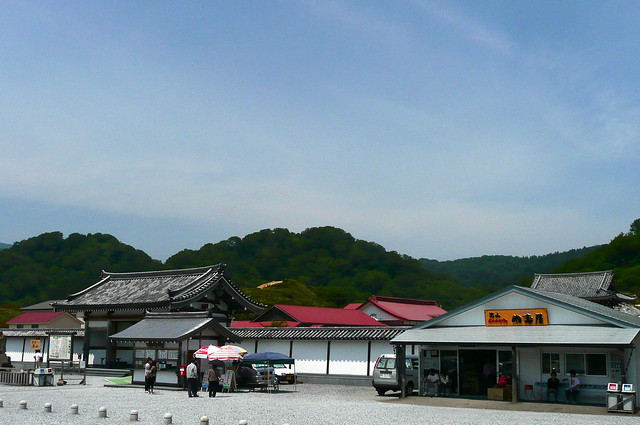
Osorezan
Osorezan by HerryLawford /flickr

Six Ksitigarbha statues stands near the front gate. The Ksitigarbhas protect all beings in the Six Realms(the human realm, the demi-god realm, the god realm, the animal realm, the hungry ghost realm, the hell realm) of Karmic Rebirth. All living beings are born into one of the six states of existence among Buddhists.
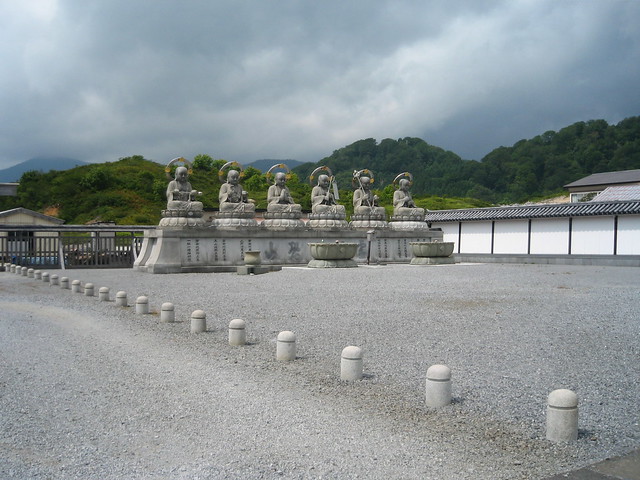
IMG_3096.jpg
IMG_3096.jpg by vera46 /flickr

Sanmon Gate(main gate)

photo by APTINET Aomori Sightseeing Guide


Osorezan
Osorezan by blueskyfantasie /flickr


The smell of sulfur wafted over its ground.

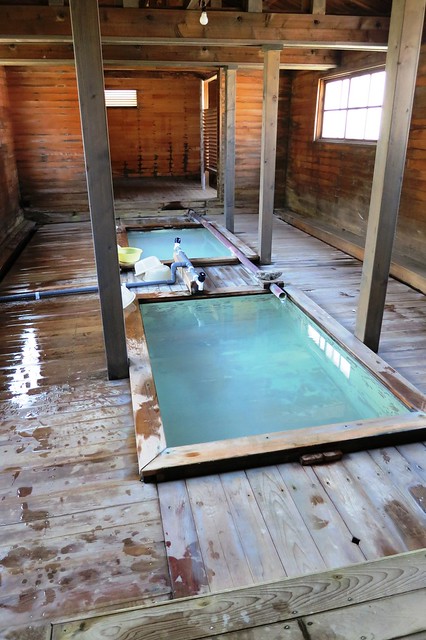
Four hot springs cabins are located on the ground. Visitors can take a bath in these hot springs, but the cabins are visible through a window. Worshippers used to purify themselves before offering prayers.
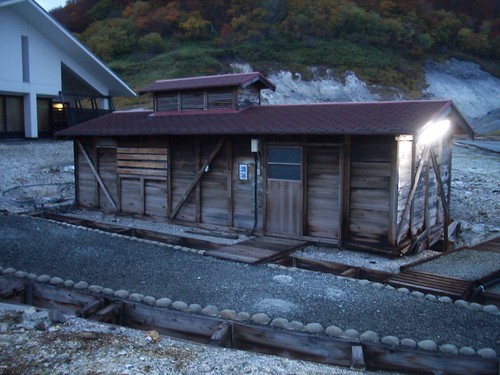
Osorezan / spa
Osorezan / spa "Hanazome" by tsuda /flickr


Osorezan / onsen
Osorezan / onsen by macchi /flickr

Temple lodging is available. It's an air-conditioned accommodation. A night's lodging costs 12,000 yen(one night and two meals per day). In principle, lodgers have to attend the morning religious service.


Toba Hall
Sotobas with a height of three meters. Sotoba(toba) is a tall wooden tablet to pray for the repose of souls. Sotoba derives from the Sanskrit word stupa.
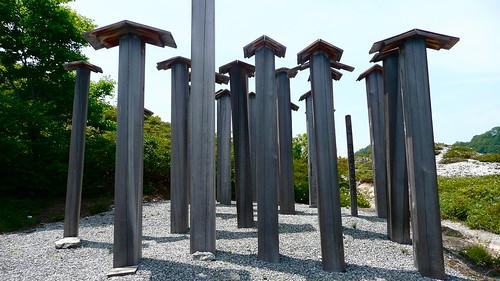
Osorezan
Osorezan by HerryLawford /flickr


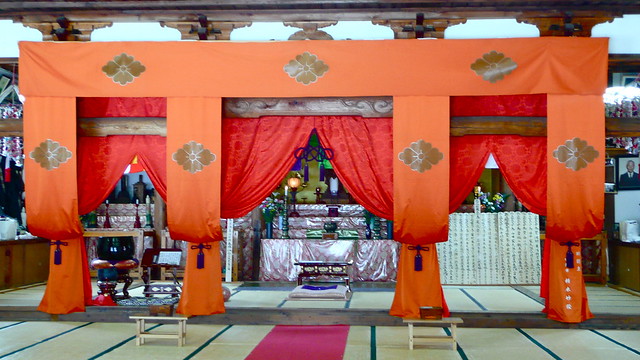
Jizoden Hall
This hall was built to enshrine Enmei Jizo Bosatsu (literally, Apothanasia Ksitigarbha), the temple's principal image of Buddha.
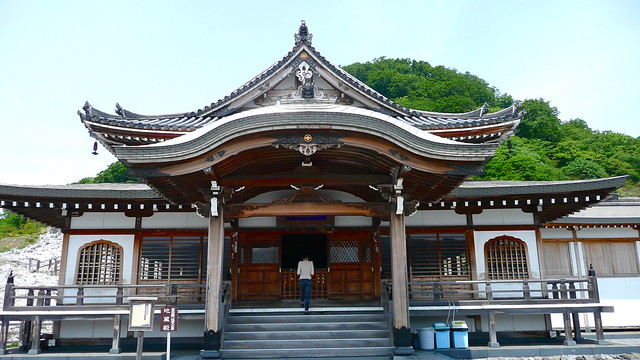
Osorezan
Osorezan by HerryLawford /flickr

interior of Jizoden Hall
Osorezan
Osorezan by HerryLawford /flickr


Osorezan
Osorezan by HerryLawford /flickr


Jizoden Hall, Sanmon Gate and Lake Usori-ko
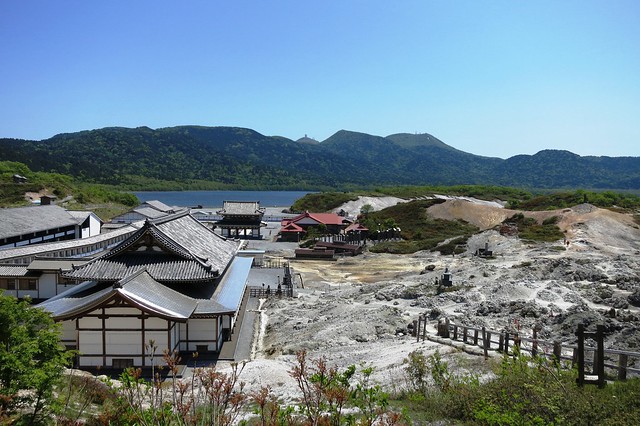
Osorezan
Osorezan by macchi /flickr


Osorezan #7
Osorezan #7 by tsuda /flickr


Taishi-do
White cloth were tied by worshippers.


photo by APTINET Aomori Sightseeing Guide


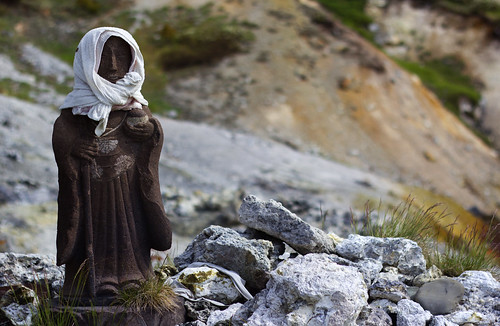
Jizo for aborted and miscarried babies

Osorezan
Osorezan by blueskyfantasie /flickr


IMG_3112.jpg
IMG_3112.jpg by vera46 /flickr


Enmei Jizo (literally, Apothanasia Ksitigarbha)

Osorezan
Osorezan by blueskyfantasie /flickr


Osorezan
Osorezan by HerryLawford /flickr


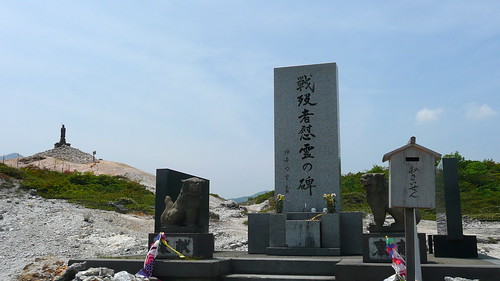
                war memorial

Osorezan
Osorezan by HerryLawford /flickr


stone Buddha statue for the souls with no living relatives
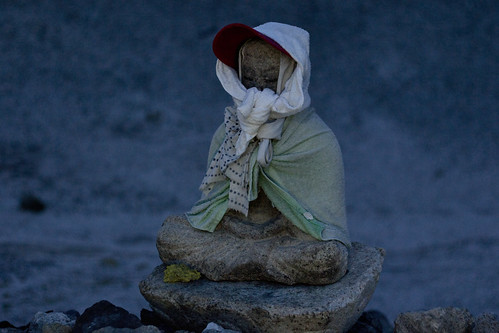
Fear Mountain - Osorezan
Fear Mountain - Osorezan / Japanexperterna.se

little statue of Senju Kannon(Thousand Armed Avalokiteshwara)
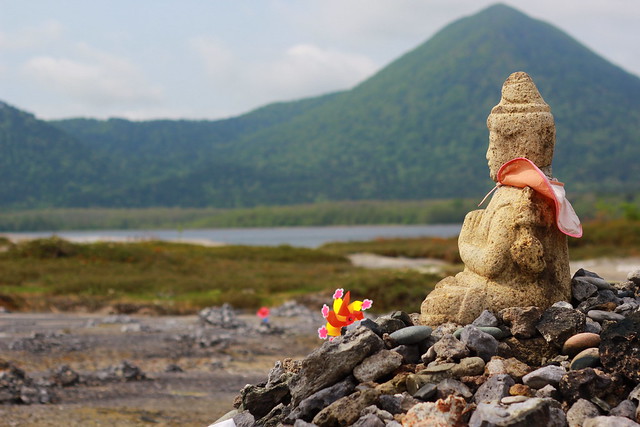
Zen Meditation
Zen Meditation by Japanexperterna.se /flickr

stone Buddha statues

Stone piles were build by the bereaved to console the spirits of their deceased family members.
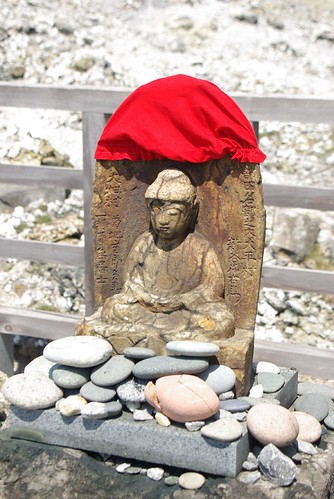
Osorezan
Osorezan by tsuda /flickr


Fear Mountain - Osorezan
Fear Mountain - Osorezan by Japanexperterna.se /flickr


IMG_3101.jpg
IMG_3101.jpg by vera46 /flickr


Datsueba and Ken-eo

An old woman called Datsueba plunders the clothes of the dead, and an old man called Ken-eo hangs the clothes on a riverside tree branch to measure the weight of guilt. They stay in the Sanzu River.

Osorezan
Osorezan by blueskyfantasie /flickr


Monday, July 6, 2015

morning glory exhibitions

In the Edo period, morning glories attracted everyone from feudal lords to common people. The development of new varieties became popular. Exhibitions of morning glories including mutant and large-flowered ones developed in the Edo Period, and ones developed in Higo(present Kumamoto). The lords of the Higo Domain encouraged the cultivation of flowers including  Chinese Peony, chrysanthemum, Japanese camellia, Morning Glory, Hanashobu(Iris ensata var. ensata) and Christmas Camellia as a mental training for samurai. There are few free photos of morning glory exhibitions because visitors can see the flowers only during morning.


18 July - 2 Aug,  8:30-17:30
Mutant morning glory exhibition 
Sengan-en(仙巌園), Kagoshima City, Kagoshima Prefecture 
Three hundred mutant morning glories of 56 different types

18-19 July,  8:00-
Mutant morning glory exhibition 
Zenko-ji Temple(善光寺), Bunkyo Ward, Tokyo 


19-20 July,  9:00-12:00
Morning glory exhibition 
Hamamatsu Flower Park, Hamamatsu City, Shizuoka Prefecture
large-flowered morning glories shaped in Nagoya style


20 July,  9:00-12:00
Higo morning glory exhibition 
Kumamoto Prefectural Outdoor Theatre Aspecta, Minami-aso Villege, Kumamoto Prefecture


22-26 July,  9:00-12:00
Nagoya morning glory exhibition 
Meijo Park Flower Plaza(名城公園フラワープラザ), Nagoya City, Nagoya Prefecture


26 July - 2 Aug,  8:00-17:00
large-flowered morning glory exhibition 
Mukojima-Hyakkaen Gardens(向島百花園), Sumida Ward, Tokyo
About 500 large-flowered morning glories. The admission fee is 150 yen for adults, 70 yen for seniors(65 & over) and children under 6 are admitted free.


26 July - 2 Aug,  6:00-11:00
morning glory exhibition
 Yasukuni Shrine(靖国神社), Chiyoda Ward, Tokyo
About 500 large-flowered morning glories are dedicated to the shrine.


28 July - 3 Aug,  8:00-12:00
Mutant and large-flowered morning glory exhibition
Hibiya Park(near tennis courts) , Chiyoda Ward, Tokyo
Admission is free. 


28 July - 13 Sept,  9:30-16:00(beginning at 8:30 during 10-16 Aug)
Traditional Japanese Morning Glories
Botanical Garden of Everyday Life, National Museum of Japanese History, Sakura City, Chiba Prefecture 
About 700 morning glories are dislayed. 


30 July - 3 Aug,  7:00-12:00
Oita City morning glory exhibition
Oita Gokoku Shrine, Oita City, Oita Prefecture 
http://www.oita-gokoku.jp/  (Japanese version only)


31 July - 4 Aug, 7:00-12:00
The 56th morning glory exhibition
 The Kyoto Prefectural Botanical Garden, Kyoto City, Kyoto Prefecture


mid July - late August
morning glory exhibition 
Daisen Park Japanese Garden, Sakai City, Osaka Prefecture
Mutant and large-flowered morning glories


1-16 Aug, 9:30-16:30
morning glory exhibition 
Osaka Prefectural Yamadaike Park, Hirakata City, Osaka Prefecture
http://yamadaike.osaka-park.or.jp/ (Japanese version only)
large-flowered morning glories 


5-9 Aug, 9:00-12:00
Sankeien morning glory exhibition 
Sankeien Garden, Yokohama City, Kanagawa Prefecture
Mutant and large-flowered morning glories


6-10 Aug, 8:30-18:00
Higo morning glory exhibition 
Kumamoto Castle Sukiyamaru square(near main castle tower), Kumamoto City, Kumamoto Prefecture 
http://www.manyou-kumamoto.jp/castle/  (Japanese version only)


late Aug - early Sept, 9:00-16:30
Mutant morning glory exhibition 
Hiroshima Botanical Garden, Hiroshima City, Hiroshima Prefecture


25-31 Aug, 9:00-16:30
Mutant morning glory exhibition 
Yokohama Municipal Children's Botanical Garden, Yokohama City, Kanagawa prefecture

28-30 Aug, 7:30-12:00
Mutant morning glory exhibition 
Hibiya Park(near tennis courts) , Chiyoda Ward, Tokyo
Admission is free. 


late Augst - early September
Higo morning glory exhibition 
Kumamoto City Zoological and Botanical Gardens, Kumamoto Prefecture


The Iriya morning glory fair is being held on the grounds of Iriya Kishimojin, Taito Ward, Tokyo from July 1 to 5, beginning at 6:00.


Friday, January 2, 2015

New Year 2015

Happy New Year!
I hope this year will be a good one.

It was a snowy New Year's Day in many areas including Yokohama.

According to the Chinese zodiac, 2015 is the Year of the Sheep.


New Year's card


"未" means sheep.

Sacred arrows(破魔矢, hamaya)  exorcise evil spirits.


New Year's card


Ema (a votive horse tablet)


New Year's card


New Year's rice cakes(Kagami-mochi)


New Year's card


Kadomatsu (New Year's pine decoration)

Boys used to  play a game of top‐spinning.


New Year's card


Ready-made New Year's dishes are set in three-tiered boxes.


a simmered dish called 'Onishime'


Thursday, September 18, 2014

The 61st Japan Traditional Art Crafts Exhibition


The 61st Japan Traditional Art Crafts Exhibition(日本伝統工芸展) is being held at Mitsukoshi department store in Tokyo from September 17 to 29.

The exhibition requires the applicants to create sophisticated design based on high degree of professional skill in Japanese traditional techniques.

See the Japan Kogei Association site for further information:
http://www.nihonkogeikai.or.jp/ (Japanese version only)


The Exhibition will travel through the following venues:


Mitsukoshi Nihonbashi Main Store, Tokyo
September 17-29, 2014
Mitsukoshi Nihonbashi Main Store:
http://mitsukoshi.mistore.jp/store/nihombashi/index.html

  
Mitsukoshi Nagoya Sakae Store, Nagoya City, Aichi Prefecture
October 1-6, 2014
Mitsukoshi Nagoya Sakae Store:
http://mitsukoshi.mistore.jp/store/common/fcs/index.html

  
Takashimaya Kyoto Store, Kyoto Prefecture
October 8-13, 2014
Takashimaya Kyoto Store:
http://www.takashimaya.co.jp/


ABENO HARUKAS(11F & 24F), Osaka City, Osaka Prefecture   
October 16-22, 2014
ABENO HARUKAS:
http://www.abenoharukas-300.jp/
Kintetsu Department Store Main Store Abeno Harukas(11F):
http://abenoharukas.d-kintetsu.co.jp/
 Osaka University of Arts Sky Campus(24F)


Ishikawa Prefectural Museum of Art, Kanazawa City, Ishikawa Prefecure
October 31-November 9, 2014
Ishikawa Prefectural Museum of Art:
http://www.ishibi.pref.ishikawa.jp/english/index.html


the Okayama Prefectural Museum of Art, Okayama City, Okayama Prefecture
November 13-30, 2014
The Okayama Prefectural Museum of Art:
http://www.pref.okayama.jp/seikatsu/kenbi/index-e.html


Shimane Art Museum, Matsue City, Shimane Prefecture
December 3-25, 2014
Shimane Art Museum:
http://www1.pref.shimane.lg.jp/contents/sam/index.html

  
the Kagawa Museum, Takamatsu City, Kagawa Prefecture
January 2-18, 2015
The Kagawa Museum:
http://www.pref.kagawa.lg.jp/kmuseum/foreign/


Mitsukoshi Sendai Store, Sendai City, Miyagi Prefecure
January 22-27, 2015
Mitsukoshi Sendai Store:
http://mitsukoshi.mistore.jp/store/sendai/index.html (Japanese version only)

  
Mitsukoshi Fukuoka Store, Fukuoka City, Fukuoka Prefecture
February 3-8, 2014
Mitsukoshi Fukuoka Store:
http://www.m.iwataya-mitsukoshi.co.jp/index.html


Mitsukoshi Matsuyama Store, Matsuyama City, Ehime Prefecture
February 17-22, 2015
Mitsukoshi Matsuyama Store:
http://mitsukoshi.mistore.jp/store/matsuyama/index.html (Japanese version only)

  
Hiroshima Prefectural Art Museum, Hiroshima City, Hiroshima Prefecture
February 25-March 15, 2015
Hiroshima Prefectural Art Museum:
http://www.hpam.jp/

Friday, August 1, 2014

morning glory exhibitions

Morning glory has been a representative flower of summer in Japan. Many people were interested in gardening or growing flowers and plants in the Edo period. The plant attracted everyone from feudal lords to common people. Two morning glory booms took place in the 19th century. A lot of cultivated varieties of morning glories had been developed during the Edo Period.

The lords of the Higo Domain encouraged the cultivation of flowers including  Chinese Peony, chrysanthemum, Japanese camellia, Morning Glory, Hanashobu(Iris ensata var. ensata) and Christmas Camellia as a mental training for samurai.

Several morning glory exhibitions are being held now. However, visitors can see the flowers only during morning.

About 500 large-flowered morning glories are being displayed in Mukojima- Hyakkaen Gardens(向島百花園), Sumida Ward, Tokyo from July 27 to August 3, beginning at 8 AM.


Mutant morning glories developed in the Edo Period and large-flowered ones are being displayed in Hibiya park, Tokyo from July 28 to August 3. No admission fee is required. Henka Asagao Kenkyukai(変化朝顔研究会, society for the studies of mutant Japanese morning glories) and Society for The Japanese morning glory studies in Tokyo(東京朝顔研究会) play host to the event. The mutants will also be displayed from August 29 to 31 in the park. 

Henka Asagao Kenkyukai (Japanese version only):

The Japanese morning glory studies in Tokyo (Japanese version only):


The 55th Morning Glory Exhibition in the Kyoto Prefectural Botanical Garden will be held  from August 1 to 5.

Three hundred mutant morning glories of 56 different types were displayed at Sengan-en Garden(仙巌園) in Kagoshima Prefecture from July 12 to 27.

Nagoya Morning Glory Festival in Nagoya City was held from July 23 to 27.

Saturday, July 19, 2014

Gion Festival in 2014

Sorry for the late update. It's been a long time.

Summer vacation has started for most students. In Japan, a lot of fireworks and festivals take place in summer. Some bon dance festivals were held in my area this weekend and also last weekend.

fireworks & summer festivals(Japanese version only):
http://hanabi.yahoo.co.jp/
http://www.rurubu.com/season/summer/hanabi/


The Gion Festival(祇園祭) is being held in Kyoto from July 1 to the 31.

about Gion Festival:
http://ichinen-fourseasonsinjapan.blogspot.jp/2010/07/end-of-rainy-season-and-gion-festival.html
http://ichinen-fourseasonsinjapan.blogspot.jp/2011/07/gion-festival1.html
http://ichinen-fourseasonsinjapan.blogspot.jp/2011/07/gion-festival2.html


 Yamaboko-junkophoto by 京都フリー写真素材

The festival's highlight is a  parade of 33 beautifully decorated floats named Yamaboko-junko or Yamahoko-junko(山鉾巡行).

Yamaboko-junko, Fune-hoko(船鉾)photo by 京都フリー写真素材


It is crowded again this year!

The parade takes place to ease crowding on July 17 and 24 this year. All of the floats had paraded in a day since 1966. Twenty-three floats paraded on the 17th, and 10 will do on the 24th.


 Ofune-boko
photo by 
全33頁 祇園祭山鉾巡行写真集

The Ofune-boko(大舩鉾) float will return to the parade on the 24th after an almost 150-year absence this year. The float was burned by the Onin War in 1467, a big fire in 1788, and the rebellion at the Hamaguri Gate (蛤御門の変) in 1864. Other yamahoko floats were also damaged by fires and wars to some degree. Taka-yama(鷹山)and Hotei-yama(布袋山) floats can't return to the parade.

photo by 京都フリー写真素材
The floats are lit up with paper lanterns in the evening.
(23 floats on 14-16, 10 floats on 21-23)

Saturday, March 15, 2014

Three years

Three years have passed since the Great East Japan Earthquake on March 11. The government-sponsored memorial ceremony for its victims was held on March 11 and its participants observed a silent prayer at 2:46 p.m., the exact time the earthquake occurred.

As of March 10, 15,884 people died, 2,633 are missing, and 2,973 died from overwork,  illness or suicide after the quake. As of February 13, 267,419 people are living in temporary or public housing, rented accommodation, relative's homes. Many families of victims are still waiting for their missing family members.The search for missing persons is still continuing.

In Miyagi and Iwate prefectures, most debris was disposed of, but most of their tsunami-hit areas are still vacant. The shortage of materials and human resources constitutes barriers to getting public-works projects under way. The population of the areas has decreased. Many of the areas need to review reconstruction projects. Many people concern that the 2020 Tokyo Olympics would take away materials and human resources from the areas.

There has been so much debris in Fukushima Prefecture. Time has stood still for several towns next to Fukushima Daiichi nuclear power plant since that terrible day. The Japanese government has lifted ban on entry or return to some parts of the exclusion zone, but most of young ex-residents are not going to return their home town.

Decommissioning of the nuclear plant is expected to take at least 40 years to complete.  Contaminated water in the plant sometimes makes the news. The decontamination operations have made little progress. We feel overwhelmed by this harsh conditions.

Some of the victims want to forget, some don't want to forget, but they all can't forget the terrible day.


Sochi gold medalist Yuzuru Hanyu was on a skating rink in Sendai, Miyagi Prefecture when a giant earthquake occurred on 11 March 2011 at 14:46 JST. He got away from the building with skating shoes on. The rink looked like the rolling sea.

The then-16-year-old figure skater lost his home and his home rink due to the quake(not tsunami - BBC wrote a mistake), spent four nights with his family on the evacuation center's floor, being frightened by intermittent aftershocks, shivering from the cold in the dark.
The earthquake caused failures in all types of lifelines including electricity, gas, water and telecommunication systems.

He performed in about 60 ice shows and practiced on the skating links where the shows were held. His home skating rink was restored four months after the quake. Though his condominium was identified as fully-destroyed, his family stays living there after the extensive repair work.

He said: Shortly after the quake, I was obsessed with survival. I wondered if I should go on skating. There were times when I thought of quitting skating. As an Olympic gold medalist, I think that I could be of assistance to the disaster victims. This is just the start.

He felt guilty about leaving Sendai for Toronto, Canada to achieve a high goal in May 2012.
He received 6,000,000 yen from the Japanese Olympic Committee and the Japan Skating Federation. He said he would donate his full reward to the devastated areas.

He observed two minutes of silence toward Japan on March 11 at 1:46 Toronto Time(14:46 Japan time) this year. As an aside, he has asthma. He takes medicine every day, and never go anywhere without his inhaler.


Japanese pitcher Masahiro Tanaka is taking the mound for the New York Yankees this season. He was the ace of the Tohoku Rakuten Golden Eagles pitching staff and racked up a record 24 consecutive wins in the 2013 season (28 consecutive wins in the 2013-2014 seasons).

Tanaka made his 2007 mound debut for the Eagles which is based in Sendai, Miyagi Prefecture. Its stadium was partially damaged due to the quake(not tsunami!). The team was playing a game in Akashi, Hyogo Prefecture when the quake occurred. The game was canceled so that the team members confirmed the safety of their family members. 

The Eagles moved from ballpark to ballpark to play games and returned to Sendai in late April. They collected donations for the victims at some ballparks, visited some evacuation centers.
A Eagles catcher said at a charity baseball game,  "Let's show Tohoku's real strength." 

The team won the Japan Series for the first time and became the best team in Japan in 2013.
Many baseball officials and sports papers expressed concern that Tanaka pitched two consecutive days at the end of the series. I don't know how much it matters. Tanaka was seen as the hero of Tohoku, and Eagles fans wanted to have the best moment with his pitching before he emigrated to the major leagues. Tanaka wanted fervently to take the mound, and the Eagles manager permitted it.
He said on his blog on March 10(March 11 in Japan): I've been feeling so much for people in the disaster areas wherever I am. I will keep on support them in any way possible.
Both of them have special places in their hearts for quake- and tsunami-hit areas in Tohoku
though it seems that Western media talk only about their capability or marketability, and Fukushima nuclear plant.


The Sanriku Railway (三陸鉄道, Sanriku Tetsudo) which has the North Rias Line and the South Rias Line extends along the Sanriku Coast. The two lines were heavily damaged by the tsunami. Shimanokoshi Station(島越駅) and the elevated railroad tracks of North Rias Line were swept away on March 11.The entire portion of the lines will reopen on April 5.

about Sanriku Railway:


The railway became widely known from its appearance on a TV serial called "Amachan". It was a comedy drama in which a teenage girl becomes an ama (a traditional female sea-diver) in her mother's hometown, acts as a local idol to revitalize the local community,  aims to be an idol on a national scale in Tokyo, return to the town after the tsunami.

It was a comedy but described the current state of rural areas with shrinking population, came face-to-face with the quake and tsunami. This drama's writer made his debut as a stage writer, and many stage actors were in the drama. They engaged in wordplay. The drama was filmed on location in Kuji City, Iwate Prefecture. Many tourists visited Kuji and took the North Rias Line.

Ama dive without scuba gear or air tanks for food like seaweed, turban shells, abalones, shellfish, oysters, sea urchins, lobsters, octopus. Ama(female sea-divers) exist only in Korea and Japan. They are called Haenyo in Korea. 

In the ancient period of Japan, ama meant male and female sea-divers. Researchers infer from tools discovered from many remains in Japan that ama have a history of more than 2,000 years. They appear in Manyoshu(A Collection of a Myriad Leaves) in 750. Female sea-divers in Shima(志摩) area appear in the Engishiki(a Japanese book about laws and customs) completed in 927. They were expressed in Ukiyoe by Kitagawa Utamaro (喜多川 歌麿, c.1753-1806), Suzuki Harunobu (鈴木 春信, c.1725-1770).  There are ama divers in Shima City, Mie Prefecture even now.


Tuesday, February 25, 2014

Japanese swords, Princess Mononoke, and Gillette

Which is stronger, a Japanese traditional sword or a pistol? In some period dramas, a samurai sometimes deflects a incoming bullet with his sword. Is that possible?

A TV program carried out an experiment to answer this question. In the experiment, a lead bullet accurately hit the edge of firmly-fastened sword's blade. The result was that the sword slashed the bullet into two. However, the sword was outdone by a machine gun with bullets for anti-materiel rifle. The sword slashed the first six bullets of the gun, but the other bullets clapped out the sword.

In the bunraku play Uzuki no Iroage(卯月の潤色, Redyeing of Uzuki)  by Chikamatsu Monzaemon, the heroine's soul is afraid the corpse of her surviving husband might be used to test the sharpness of swords after being executed. In those days, survivors of love suicide supposed to be executed.

In the Edo Period, the corpses of beheaded criminals were often used to test the sharpness of swords. Swordmakers stamped their names on the blades of their swords. The test results like "cut off two corpses" or "cut off three corpses" were also often inscribed on the blades. A sword made by Seki no Kanefusa(関兼房) has the inscription that a sword tester cut off stacked seven corpses with the sword in 1681. Testers were also excellent swordmen.

sword inscription
大和ミュージアム
大和ミュージアム by Norio.NAKAYAMA /flickr

Japanese sword has both flexibility and rigidity. A key to unlocking the secret of the sword is a specialized Japanese steel called tama-hagane(玉鋼).

An ancient Japanese ironworks called Tatara(鑪 or 踏鞴) appears in the animated film Princess Mononoke directed by Hayao Miyazaki.  In the beginning "Tatara" meant a foot bellows, and it came to include furnaces and ironworks. Tatara iron making method dates back well over a millenary.

While the iron making using iron ore was introduced to Japan from the Korean Peninsula in the 6th century, iron had already been made from iron sand in Izumo area in Shimane Prefecture independently. In Tatara steelmaking method, iron sand and charcoal are mixed together in a clay furnace. The method was completed in the mid-18th century.

The ironworks in the film is much bigger than the real one existed in Izumo. Women blow a bellows in the film, but men did in fact.

A furnace-lighting ceremony was held at the Nittoho Tatara(日刀保たたら) ironworks on January 22. The ironworks operates only for three weeks a year in winter. There are two ironmaking methods using tatara furnace. Steel is produced directly from the iron sand at the ironworks. The other way is directed toward producing pig iron.

Twelve tatara operators including two chief engineers did 70-hour long work three times during the period from January 22 to February 8.

Nittoho Tatara
photo by Shimane Prefectural Tourism Federaion

With each work, the operators alternately throw iron sand and charcoal into a clay furnace (1 meter wide, 3 meters long and 1.2 meters high) every half hour, and 2.5 tons of a mass of steel called kera is acquired from 10-ton iron sand and 12-ton charcoal. Kera includes tama-hagane, pig iron, another types of iron and steel. 

Nittoho Tatara
photo by Shimane Prefectural Tourism Federaion


After the work, the operators break down the furnace and bring out kera. 

Nittoho Tatara
photo by Shimane Prefectural Tourism Federaion

Kera is broken into some pieces and are sorted out. The best portions will become tama-hagane. The pieces include zuku(pig iron) with carbon content over 1.7%. One-half or one-third of kera is tama-hagane which is rated using a 4-point scale. Kera includes top-grade 100-kg tama-hagane.

The pieces other than tama-hagane are remelted, folded lengthwise and forged to increase their viscosity, beat impurities out of them, equalize the distribution of carbon content. They are formed into hocho-tetsu(wrought iron) with carbon content 0.1-0.3%, sage-hagane (steel) with carbon content about 0.7%. Zuku is used as material for cast metal, hocho-tetsu, sage-hagane. Tama-hagane has a carbon content of 1% to 1.5%.


Iron made in a tatara furnace including tama-hagane contains extremely low chemical impurities such as phosphorus and sulfur. Some people consider charcoal as a possible cause. Phosphorus and sulfur contained in steel, even in trace amounts, make steel brittle. As a fuel, western-style iron making uses coke, and tatara-based iron making does charcoal. Coke has more phosphorus and sulfur than charcoal does. However, the oxygen converter process made it possible to reduce phosphorus and sulfur and to make low-carbon steel. 

Some people speculates that silicon dioxide contained in the clay furnace also increases the viscosity of tama-hagane.

Compared with modern steel, Japanese steel (tama-hagane) manufacturing through tatara iron making is also high in oxygen content, and iron slag(the non-metal inclusion) found in the steel contains more oxide-based inclusions which are extremely soft and are easily stretched. By repeatedly forging the steel, the oxide-based inclusions are finely dispersed.

This makes Japanese swords strong, increases their viscosity, produces blade patterns on them, and makes them easier to be ground. Normally, non-metal inclusions are a nuisance to steel. However, they are considered as a positive factor in making Japanese steel.

Swordsmiths combine one or two kinds of Japanese steel together to adjust the carbon content during the forging process, and several kinds of steel are created. Japanese swords were made up of 2-4 kinds of steel having different carbon content: soft steel with carbon content about 0.3%(the core of sword), hard steel with carbon content about 0.8%(the blade edge), hard steel(the spine of sword), medium steel with carbon content about 0.6%(both sides of blade).

They include almost no chemical elements other than iron and carbon, so they can be forge welded without flux. Japanese forged cutting tools are produced by mechanical alloying. 

Japanese sword smiths, Akimori Miyagi(宮城昭守) and his son Norizane Miyagi(宮城典真)
 in Shiraishi City, Miyagi Prefecture

photo by Miyagi Prefectural Tourism Division

The tools heated to over 800 degrees Celsius is quenched not in oil, but in water. Only part of edge can be hardened through heating. Heated normal steel gets cracked by quenching in water. The forged cutlery is an alloy of steels with different carbon concentrations, so it prevents the cutlery from cracking.


photo by Miyagi Prefectural Tourism Division

Uchihamono(打刃物, forged iron cutting tools) in Nakaniida(中新田), Kami-machi, Miyagi Prefecure


It is said that a swordsmith started it there in the late 17th century. Nakaniida's forged iron cutlery such as knife, sickle is made with the same method as Japanese swords.


Tatara-based iron making cpmpleted in the mid-18th century is only one of ironmaking methods. The ancient swords produced during the Kamakura Period(1185-1333) and the the Northern and Southern Courts period(1334-1392) are considered the highest-grade swords, but it's unclear how they were made. They were made of soft steel, but they are sharper than swords made in other periods. Their blades are composite of several kinds of steel due to primitive iron making methods. Japanese swords have been meant to be a work of art since tama-hagane(hard steel) came to be used in sword-making in the Edo Period, a warless period.


Osafune(?) made in the 15th century at the Tokyo National Museum

Osafune
Osafune by kanegen /flickr

The Society for Preservation of Japanese Art Swords(日本美術刀剣保存協会) runs Nittoho Tatara, and the employees of Hitachi Metals Yasugi Works operate it. Several swordsmiths and researchers have small tatara furnaces, but it seems to be difficult to make perfect steel.

This traditional method has a low yield rate. It is ill-suited to mass production. Tatara-based iron making had gone into a gradual decline since the introduction of western-style iron making method in the late 19th century. Its commercial production ended in 1925.

The Society for Preservation of Japanese Art Swords rebuilt the Nittoho tatara ironworks with support from the Agency for Cultural Affairs to provide Japanese steel to Japanese sword smiths in Okuizumo, Shimane Prefecture in 1977.

Only about 300 swordsmiths licensed by the Agency for Cultural Affairs are allowed to make Japanese swords, and each swordsmith is permitted to make two sword a month.
All traditional swords made in Japan have to be registered with a local prefectural government. Japanese swords with Torokusho(registration certificate) are available.

The owners of five tatara ironworks in Okuizumo(奥出雲) and Hoki(伯耆) established the Unpaku Steel Limited Partnership Company(雲伯鉄鋼合資会社) to manufacture and sell tatara products in a  district near Yasugi Harbor, Shimane Prefecture in 1899. This later became Hitachi Metals Yasugi Works.

Hitachi Metals used modern technologies to develop Yasugi Specialty Steel(YSS) with the unique characteristics (i.e., the purity) of Japanese steel.

The company is one of suppliers of steel strips for razor blades. It is said that YSS accounted for 60-70% in the world market of razor blade steel and was supplied to razor makers such as Gillette, Schick, Wilkinson in the mid-2000s. Some people say its current world market share makes about 40-65%, but I'm not really sure about it.

In Japan, most Japanese cuisine cheffs use a knife with YSS blade, and many professional-quality cutting tools have YSS blades.


Neon Genesis Evangelion (新世紀エヴァンゲリオン, Shin Seiki Evangelion) is a Japanese science-fiction animation series. The“Evangelion and Japanese Swords”Exhibition included Japanese swords inspired by the Evangelion series and its characters. Traditional Japanese swords were also on exhibit. Japanese swordsmiths across Japan have tried to recreate Evangelion's world.

In 2014, the exhibition will take place at Maison de la culture du Japon à Paris, Paris, France from April 30 to June 21, at Museo ABC, Madrid, Spain from July 5 to September 28.


"Lance of Longinus”appears in Evangelion

2013-03-22
2013-03-22 by Norio.NAKAYAMA /flickr