A volcano named Shinmoe-dake (新燃岳) in Kyushu is erupting and volcanic ash is falling on a widespread area. There are many volcanoes in Japan and some of them often erupt. An old friend of mine who lived in Kagoshima of Kyushu said that volcanic ash of Sakura-jima(桜島) fell on Kagoshima City in summer.
Many areas in Japan is experiencing heavy snowfall this winter.
Houses can't bear the weight of a heavy layer of snow if people get the snow off them. There have been more accidents during snow removal.
H5N1 avian flu outbreak has been confirmed in several areas in Japan. It's thought that the wild birds are carrying the virus.
The infected birds include Hooded cranes(鍋鶴, nabe-zuru), White-naped cranes(真鶴, mana-zuru) and Whooper swans.
Nearly 90 percent of Hooded cranes and nearly 50 percent of White-naped cranes overwinter at Izumi in Kyusu of Japan. Both of them are designated as an endangered species, so there is concern about decreasing populations of them.
tulip(green) Mizu-asobi(水遊び)
tulip(pink) Tsuru(鶴, crane)
This is a Red-crowned crane(丹頂鶴, tancho-zuru) that is known as a symbol of luck and longevity. A flock of them is resident in Hokkaido.
These tulips are like cabbage..
These confections contain steamed and mashed lily bulbs.
Japan's national team won the Asian Cup soccer tournament.
This is the only upbeat topic.
This blog mainly introduces traditional Japanese things including seasonal events, flowers, confectionery, handicrafts, bunraku(Japanese puppet theater). Short introductions and links to all of my blog posts are shown on four calendar pages on sidebar.
Events:
Cherry Blossom Forecast 2026
https://www.japan-guide.com/sakura/
https://n-kishou.com/corp/news-contents/sakura/?lang=en
https://sakura.weathermap.jp/ (Japanese version only)
https://tenki.jp/sakura/expectation/ (Japanese version only)
https://www.otenki.jp/sp/art/sakura/?pg=11 (Japanese version only)
when and where to see fall foliage(Japanese version only):
https://hanami.walkerplus.com/
https://sp.jorudan.co.jp/hanami/
Cherry Blossom Forecast 2026
https://www.japan-guide.com/sakura/
https://n-kishou.com/corp/news-contents/sakura/?lang=en
https://sakura.weathermap.jp/ (Japanese version only)
https://tenki.jp/sakura/expectation/ (Japanese version only)
https://www.otenki.jp/sp/art/sakura/?pg=11 (Japanese version only)
when and where to see fall foliage(Japanese version only):
https://hanami.walkerplus.com/
https://sp.jorudan.co.jp/hanami/
Sunday, January 30, 2011
Saturday, January 29, 2011
the numbers of visiting shrines and temples
Many Japanese people visit a Shinto shrine or Buddhist temple at the beginning of January.
Although The National Police Agency used to release its estimates for people visiting shrines and temples between January 1st and 3rd around this time of the year, it announced that it would not release the estimates due to its inexactness last year.
The Shinto shrines and Buddhist temples that were ranked in the top ten in 2010 are as follows.
1. Meiji Jingu Shrine(明治神宮) 3.2 million visitors
2. Narita-san Shinsho-ji Temple(成田山新勝寺) 2.98 million
3. Kawasaki Daishi Heikenji Temple(川崎大師平間寺) 2.96 million
4. Fushimi Inari Taisha Shrine(伏見稲荷大社) 2.7 million
5. Sumiyoshi Grand Shrine (住吉大社, Sumiyoshi-taisha) 2.6 million
6. Senso-ji Temple(浅草寺) in Asakusa(7位) 2.54 million
7. Tsurugaoka Hachiman-gu Shrine(鶴岡八幡宮) 2.5 million
8. Atsuta-jingu Shrine (熱田神宮) 2.35 million
9. Omiya Hikawa Jinja Shrine(大宮氷川神社) 2.05 million
10. Dazaifu Tenman-gu Srinne(大宰府天満宮) 2 million
Meiji Jingu Shrine was built in 1920 to honor Emperor Meiji(1852-1912) and Empress Shoken(1849-1914).
Groves are attached to shrines. An artificial grove was created for the shrine. Plant scientists took potential natural vegetation into consideration for everlasting grove. They decided to plant evergreen broadleaf trees such as chinquapin trees, oak trees so that the grove of the shrine would become close to the wild condition in 100 years.
Although the prime minister at that time insisted on planting Japanese cedars like the avenue of cedars at Nikko Toshogu, they convinced him that the cedars didn't thrive around the shrine.
The grove has thriven naturally in the shrine's climate.
About 100,000 trees of 365 different kinds were planted, and 170,000 trees of 246 different kinds are firmly rooted in the grove now.
Recently, an old well called Kiyomasa no Ido(清正井) on the site of the shrine is famous as an energy spot or a sacred place. However, we are not allowed to get some water from the well. People only use its image as their cellular phone wallpaper.
Narita-san Shinsho-ji has a profound connection with the Ichikawa family in kabuki.
Refer to Fushimi Inari Taisha for information about hatsu-uma.
Tree Peonies are now at their peak at a garden in Tsurugaoka Hachiman-gu. It requires an entrance fee.
Dazaifu Tenman-gu was built in 919 to honor Sugawara Michizane.
Refer to Michizane for information about Ume-Matsuri and Why did Sugawara Michizane become a god?
Although The National Police Agency used to release its estimates for people visiting shrines and temples between January 1st and 3rd around this time of the year, it announced that it would not release the estimates due to its inexactness last year.
The Shinto shrines and Buddhist temples that were ranked in the top ten in 2010 are as follows.
1. Meiji Jingu Shrine(明治神宮) 3.2 million visitors
2. Narita-san Shinsho-ji Temple(成田山新勝寺) 2.98 million
3. Kawasaki Daishi Heikenji Temple(川崎大師平間寺) 2.96 million
4. Fushimi Inari Taisha Shrine(伏見稲荷大社) 2.7 million
5. Sumiyoshi Grand Shrine (住吉大社, Sumiyoshi-taisha) 2.6 million
6. Senso-ji Temple(浅草寺) in Asakusa(7位) 2.54 million
7. Tsurugaoka Hachiman-gu Shrine(鶴岡八幡宮) 2.5 million
8. Atsuta-jingu Shrine (熱田神宮) 2.35 million
9. Omiya Hikawa Jinja Shrine(大宮氷川神社) 2.05 million
10. Dazaifu Tenman-gu Srinne(大宰府天満宮) 2 million
Meiji Jingu Shrine was built in 1920 to honor Emperor Meiji(1852-1912) and Empress Shoken(1849-1914).
Groves are attached to shrines. An artificial grove was created for the shrine. Plant scientists took potential natural vegetation into consideration for everlasting grove. They decided to plant evergreen broadleaf trees such as chinquapin trees, oak trees so that the grove of the shrine would become close to the wild condition in 100 years.
Although the prime minister at that time insisted on planting Japanese cedars like the avenue of cedars at Nikko Toshogu, they convinced him that the cedars didn't thrive around the shrine.
The grove has thriven naturally in the shrine's climate.
About 100,000 trees of 365 different kinds were planted, and 170,000 trees of 246 different kinds are firmly rooted in the grove now.
Recently, an old well called Kiyomasa no Ido(清正井) on the site of the shrine is famous as an energy spot or a sacred place. However, we are not allowed to get some water from the well. People only use its image as their cellular phone wallpaper.
Narita-san Shinsho-ji has a profound connection with the Ichikawa family in kabuki.
Refer to Fushimi Inari Taisha for information about hatsu-uma.
Tree Peonies are now at their peak at a garden in Tsurugaoka Hachiman-gu. It requires an entrance fee.
Dazaifu Tenman-gu was built in 919 to honor Sugawara Michizane.
Refer to Michizane for information about Ume-Matsuri and Why did Sugawara Michizane become a god?
Sunday, January 23, 2011
The mountain-burning event
The mountain-burning event at Mount Wakakusa (若草山, Wakakusa-yama) in Nara Prefecture was held yesterday. The event attracts many visitors. It's held annually on the 4th Saturday in January now.
Various events and a prayer for safety are held before its prescribed burn that starts around 18:00 and ends around 19:00.
However its exact origin is unclear. The montain was already covered with turf by 1255.
Various events and a prayer for safety are held before its prescribed burn that starts around 18:00 and ends around 19:00.
However its exact origin is unclear. The montain was already covered with turf by 1255.
Thursday, January 20, 2011
Daikan
Abashiri Local Meteorological Observatory observed the drift ice in the Sea of Okhotsk yesterday. A staff of Shiretoko Nature Center said that ice like sherbet was casting ashore and it led to the onset of a full-fledged winter.
The 20th day of the 1st month is called Hatsuka-shogatsu(二十日正月). On this day, all of the events related to Shogatsu finish. In the old days it was thought that the god of the New Year came back to the sky, and Kagami-Biraki(鏡開き: eating New Year's rice cakes) used to be held on this day.
According to system of 24 seasonal divides that originated in ancient China, today is the coldest day in winter called Daikan(大寒). It's very cold about this time of the year.
The second coldest day called Shokan(小寒) was January 6th. We can send a midwinter greeting card (寒中見舞い, Kanchu-mimai ) during the period from Shokan to Rissyun(立春:the first day of spring, February 4th).
The ninth day from Shokan is called Kanku(寒九). Coldness and drying keep away bacteria from developing during this period, so sake brewers used to draw water on this day. Even now a brewer draws mountain water on the day of Kanku.
Body trainings such as midwinter training and midwinter swimming are held during the period.
The 20th day of the 1st month is called Hatsuka-shogatsu(二十日正月). On this day, all of the events related to Shogatsu finish. In the old days it was thought that the god of the New Year came back to the sky, and Kagami-Biraki(鏡開き: eating New Year's rice cakes) used to be held on this day.
According to system of 24 seasonal divides that originated in ancient China, today is the coldest day in winter called Daikan(大寒). It's very cold about this time of the year.
The second coldest day called Shokan(小寒) was January 6th. We can send a midwinter greeting card (寒中見舞い, Kanchu-mimai ) during the period from Shokan to Rissyun(立春:the first day of spring, February 4th).
The ninth day from Shokan is called Kanku(寒九). Coldness and drying keep away bacteria from developing during this period, so sake brewers used to draw water on this day. Even now a brewer draws mountain water on the day of Kanku.
Body trainings such as midwinter training and midwinter swimming are held during the period.
Monday, January 17, 2011
the 16th anniversary of the Great Hanshin Awaji Earthquake
Sixteen years have passed since the Great Hanshin Awaji earthquake occurred on January 17.
A TV drama derived from the earthquake is now showing at some theaters in Japan.
The leading characters are a man and a woman who experienced the earthquake in their childhood. They walk through the town of Kobe.
His father who worked with housing-related materials made massive profits after the Hanshin Awaji Earthquake. However, he didn't feel like staying. He tells his stories.
After one of her friends was killed by the quake, the friend's father became mentally unbalanced. She couldn't bear to see him living in Kobe, but she takes the plunge and sees him.
Finally, they attend a memorial ceremony held in Kobe at 5:46 JST on January 17.
The two actors playing the lead in the drama actually experienced the earthquake.
The ceremony is held annually on January 17 at Higashi Yuenchi Park to mourn the victims and pass on stories of the disaster. This drama was shot at the park in the early morning of January 17th.
The town of Kobe also plays the leading part.
A TV drama derived from the earthquake is now showing at some theaters in Japan.
The leading characters are a man and a woman who experienced the earthquake in their childhood. They walk through the town of Kobe.
His father who worked with housing-related materials made massive profits after the Hanshin Awaji Earthquake. However, he didn't feel like staying. He tells his stories.
After one of her friends was killed by the quake, the friend's father became mentally unbalanced. She couldn't bear to see him living in Kobe, but she takes the plunge and sees him.
Finally, they attend a memorial ceremony held in Kobe at 5:46 JST on January 17.
The two actors playing the lead in the drama actually experienced the earthquake.
The ceremony is held annually on January 17 at Higashi Yuenchi Park to mourn the victims and pass on stories of the disaster. This drama was shot at the park in the early morning of January 17th.
The town of Kobe also plays the leading part.
Sunday, January 16, 2011
Yabuiri
The 16th day of the 1st month was called Yabuiri(藪入り).
Yama(閻魔大王, Enma Daiou) is the lord of death and give sentence on the dead. Yama and devils working in hell take time off on the 16th day of the 1st month and the 16th day of the 7th month when the lid of hell's caldron is taken off. So hell is closed on the two days.
Merchants' apprentices took a leave of absence on these days. Their masters gave them seasonable clothes and their allowance. They visited Enma-do(閻魔堂: Yama hall) and entertainment spots such as Ueno, Asakusa and a playhouse.
Married women could go home to see their parents on these days.
In the Edo Period, merchants and artisans ordinarily had 1st, 15th and 28th of each month off. In addition, they had many regular holidays under the arrangement with their peers and holidays associated with various events.
According to a public agreement issued in Osaka in 1794, artisans worked from 8 am to 6 pm, had a thirty-minute break at 10 am and 2 pm and had an hour lunch break (two-hour break from the 8th day of the 4th month to the 1st day of the 8th month).
Their holidays included 1st and 15th days of each month, five festival days, New Year's holidays from the 25th day of the 12th month to the 9th day of the 1st month and Bon holidays from the 11th day of the 7th month to 20th.
Yama(閻魔大王, Enma Daiou) is the lord of death and give sentence on the dead. Yama and devils working in hell take time off on the 16th day of the 1st month and the 16th day of the 7th month when the lid of hell's caldron is taken off. So hell is closed on the two days.
Merchants' apprentices took a leave of absence on these days. Their masters gave them seasonable clothes and their allowance. They visited Enma-do(閻魔堂: Yama hall) and entertainment spots such as Ueno, Asakusa and a playhouse.
Married women could go home to see their parents on these days.
In the Edo Period, merchants and artisans ordinarily had 1st, 15th and 28th of each month off. In addition, they had many regular holidays under the arrangement with their peers and holidays associated with various events.
According to a public agreement issued in Osaka in 1794, artisans worked from 8 am to 6 pm, had a thirty-minute break at 10 am and 2 pm and had an hour lunch break (two-hour break from the 8th day of the 4th month to the 1st day of the 8th month).
Their holidays included 1st and 15th days of each month, five festival days, New Year's holidays from the 25th day of the 12th month to the 9th day of the 1st month and Bon holidays from the 11th day of the 7th month to 20th.
Saturday, January 15, 2011
Ko-shogatsu
The annual National Center Test for University Admissions is conducted throughout Japan on January 15th and 16th, but it's snowing in many areas. The test serves as the preliminary hurdle for those seeking entrance to public universities. Recently, more private schools have adopted the test.
The first three days of the new year are called sanga nichi or Shogatsu(正月). The 15th day of the 1st month has been called Ko-shogatsu(小正月) which literally means minor shogatsu.
Housewives used to be busy for reception to visitors or relatives for the three days, but they took a rest on January 15th. So it is said New Year holidays for women. Originally the period called matsu-no-uchi(松の内)last until January 15th.
Ancient people had the custom of eating rice gruel with sweet adzuki beans on this day.
The events of Ko-shogatsu include Sagicho(左義長), Torioi(鳥追い: driving off birds) and Tsunahiki(綱引き: tug of war).
Sagicho is an event to burn New Year's decorations or calligraphy works written on January 2nd. It's also called Dondo-yaki(どんど焼き). The event is thought to be held to pray for good harvests, good health and the safety of families or to send the god of the New Year back to the sky by burning things related to Shogatsu. This event is held across the country.
Torioi is thought to be held to pray for protecting rice paddies from birds. Children parade through the town singing a song.
Tsunahiki is a tug-of-war between two neighboring villages or areas to tell whether crops would be good or not.
These events are still held in areas such as Tohoku and Shinetsu.
The first three days of the new year are called sanga nichi or Shogatsu(正月). The 15th day of the 1st month has been called Ko-shogatsu(小正月) which literally means minor shogatsu.
Housewives used to be busy for reception to visitors or relatives for the three days, but they took a rest on January 15th. So it is said New Year holidays for women. Originally the period called matsu-no-uchi(松の内)last until January 15th.
Ancient people had the custom of eating rice gruel with sweet adzuki beans on this day.
The events of Ko-shogatsu include Sagicho(左義長), Torioi(鳥追い: driving off birds) and Tsunahiki(綱引き: tug of war).
Sagicho is an event to burn New Year's decorations or calligraphy works written on January 2nd. It's also called Dondo-yaki(どんど焼き). The event is thought to be held to pray for good harvests, good health and the safety of families or to send the god of the New Year back to the sky by burning things related to Shogatsu. This event is held across the country.
Torioi is thought to be held to pray for protecting rice paddies from birds. Children parade through the town singing a song.
Tsunahiki is a tug-of-war between two neighboring villages or areas to tell whether crops would be good or not.
These events are still held in areas such as Tohoku and Shinetsu.
Friday, January 14, 2011
Utakai Hajime
Utakai Hajime (Imperial New Year's Poetry Reading) was held at the Imperial Palace in Tokyo on January 14. The reading of traditional tanka poetry is convened by the Emperor.
This year's theme was "葉(ha: the leaf)" and next year's theme is "岸(kishi: the shore)".
Ceremony of the Utakai Hajime(The Imperial Household Agency)
Gyodai(odai)-gashi(御題菓子:confection associated with this year's theme)
This confection is named Oimatu(老松: old pine). Pines have been reagarded as a sacred tree and a symbol of longevity in Japan since ancient times. Old pines are stately.
This year's theme was "葉(ha: the leaf)" and next year's theme is "岸(kishi: the shore)".
Ceremony of the Utakai Hajime(The Imperial Household Agency)
Gyodai(odai)-gashi(御題菓子:confection associated with this year's theme)
This confection is named Oimatu(老松: old pine). Pines have been reagarded as a sacred tree and a symbol of longevity in Japan since ancient times. Old pines are stately.
Monday, January 10, 2011
Coming-of-Age Day and Lucky Men
The second Monday of January is Coming-of-Age Day. Coming-of-Age ceremonies were held in most areas. New adults have grown up after burst of the economic bubble. So they have never experienced a booming economy.
Nishinomiya Jinja Shrine(西宮神社) in Nishinomiya City of Hyogo Prefecture is the head shrine that is dedicated to Ebisu. Its main gate is opened at six in the morning of January 10th and many men rush into the main hall to win laurels as "Lucky Men".
Top three men can get alcoholic drinks, a bag of rice and a statue of Ebisu.
写真提供:神戸観光壁紙写真集
photo: http://kobe-mari.maxs.jp/
![]() |
| re-enactment of the race |
Nishinomiya Jinja Shrine(西宮神社) in Nishinomiya City of Hyogo Prefecture is the head shrine that is dedicated to Ebisu. Its main gate is opened at six in the morning of January 10th and many men rush into the main hall to win laurels as "Lucky Men".
Top three men can get alcoholic drinks, a bag of rice and a statue of Ebisu.
写真提供:神戸観光壁紙写真集
photo: http://kobe-mari.maxs.jp/
Sunday, January 9, 2011
Toka-Ebisu
photos: (c)joyphoto.com (Japanese version only)
These pictures were taken in 2010.
Toka-Ebisu(十日えびす) is being held at Imamiya Ebisu Jinja Shrine(今宮戎神社) in Osaka from anuary 9th to 11th. It's a festival to pray for the prosperity of business.
(Refer to Ebisu-kou and Bettara fair for information on Ebisu-kou)
Fuku-musume(福娘:Lucky Girls) bestow a moso bamboo branch on visitors and attach a talisman and auspicious objects called kiccho(吉兆) on it from 9 a.m. to 9 p.m. for the three days.
The objects are modeled after eboshi(烏帽子), fan(末広,suehiro), moneybag(銭袋,zenibukuro), oval gold coin(小判,koban), sea bream, mortar(臼,usu), lucky mallet(打出の小槌,uchide-no-kozuchi), account book(大福帳,daifukucho), masu(升:a square wooden box used to measure rice), bags of rice(米俵,kome-dawara), awabi-noshi(鮑熨斗:dried and stretched abalone), weight(分銅, fundo) and chogin(丁銀:oval silver coin in the Edo Period).
Eboshi is a black-lacquered headgear originally worn by court nobles in ancient Japan.
Bamboo branches and talismans are provided gratis, but other objects cost 1,500 yen each.
Hoekago procession(宝恵駕籠行列, Hoekago Gyoretsu) paraded on 9th. Dressed geisha visited the shrine on palanquins in the middle of the 18th century. Now entertainers, baseball players, geisha and puppeteer and puppet of bunraku participate in the parade.
National Bunraku Theatre is near the shrine.
Fuku-musume is wearing eboshi.
These pictures were taken in 2010.
Toka-Ebisu(十日えびす) is being held at Imamiya Ebisu Jinja Shrine(今宮戎神社) in Osaka from anuary 9th to 11th. It's a festival to pray for the prosperity of business.
(Refer to Ebisu-kou and Bettara fair for information on Ebisu-kou)
Fuku-musume(福娘:Lucky Girls) bestow a moso bamboo branch on visitors and attach a talisman and auspicious objects called kiccho(吉兆) on it from 9 a.m. to 9 p.m. for the three days.
The objects are modeled after eboshi(烏帽子), fan(末広,suehiro), moneybag(銭袋,zenibukuro), oval gold coin(小判,koban), sea bream, mortar(臼,usu), lucky mallet(打出の小槌,uchide-no-kozuchi), account book(大福帳,daifukucho), masu(升:a square wooden box used to measure rice), bags of rice(米俵,kome-dawara), awabi-noshi(鮑熨斗:dried and stretched abalone), weight(分銅, fundo) and chogin(丁銀:oval silver coin in the Edo Period).
Eboshi is a black-lacquered headgear originally worn by court nobles in ancient Japan.
Bamboo branches and talismans are provided gratis, but other objects cost 1,500 yen each.
Hoekago procession(宝恵駕籠行列, Hoekago Gyoretsu) paraded on 9th. Dressed geisha visited the shrine on palanquins in the middle of the 18th century. Now entertainers, baseball players, geisha and puppeteer and puppet of bunraku participate in the parade.
National Bunraku Theatre is near the shrine.
Fuku-musume is wearing eboshi.
Tuesday, January 4, 2011
the first working day of the year
In Japan, January 4th is the first working day of the year for most public servants and companies.
The stock exchanges in Japan held the first session of the new year called daihakkai(大発会). Female employees wearing long-sleeved kimono ring the opening bell at Tokyo Stock Exchange every year. They are able to choose whether or not to wear kimono, so they spend their own money for dressing and hairdressing.
Sunday, January 2, 2011
first things of the year
Return rush has started. Expressways, bullet trains and flights were crowded.
About 77,000 people went to the Imperial Palace and offer their congratulations to the Emperor. The Emperor and the imperial family wave to the people standing on a balcony five times. People are allowed to enter the palace only on January 2nd and the Emperor's birthday.
People do the various first things of the year on January 2nd.
Hatsuyume(初夢) means the first dream of the new year. It refers to the dream seen on the night of January 1st or 2nd.
People have believed their fortunes are told in the dream, so they slept after placing a picture of a ship full of treasures called takarabune(宝船) under their pillows to have a good dream.
Kakizome(書き初め) is the first calligraphy writing of the New Year held on January 2nd of each year.
The day is also the first day of work for fishermen, farmers, woodcutters and merchants.
Most department stores around Japan reopened for business and began selling lucky bags called fukubukuro(福袋) on January 2nd.
Most major supermarkets came to be open on January 1st since the mid-1990s, but some of them are closed on the day recently.
A lucky bag used to be a set of various mystery articles, but now many shops announce a bag's contents in advance. Queues of people formed in front of department stores.
Lucky bags include clothes, edible goods and various other items. There are also lucky bags containing a 500-thousand-yen wedding package, a 18-million-yen vacation package, a 10-million-yen set of a piano and a cameo accessory, a 10-million-yen kimono and a 200-million-yen diamond accessories.
About 77,000 people went to the Imperial Palace and offer their congratulations to the Emperor. The Emperor and the imperial family wave to the people standing on a balcony five times. People are allowed to enter the palace only on January 2nd and the Emperor's birthday.
People do the various first things of the year on January 2nd.
Hatsuyume(初夢) means the first dream of the new year. It refers to the dream seen on the night of January 1st or 2nd.
People have believed their fortunes are told in the dream, so they slept after placing a picture of a ship full of treasures called takarabune(宝船) under their pillows to have a good dream.
Kakizome(書き初め) is the first calligraphy writing of the New Year held on January 2nd of each year.
The day is also the first day of work for fishermen, farmers, woodcutters and merchants.
Most department stores around Japan reopened for business and began selling lucky bags called fukubukuro(福袋) on January 2nd.
Most major supermarkets came to be open on January 1st since the mid-1990s, but some of them are closed on the day recently.
A lucky bag used to be a set of various mystery articles, but now many shops announce a bag's contents in advance. Queues of people formed in front of department stores.
Lucky bags include clothes, edible goods and various other items. There are also lucky bags containing a 500-thousand-yen wedding package, a 18-million-yen vacation package, a 10-million-yen set of a piano and a cameo accessory, a 10-million-yen kimono and a 200-million-yen diamond accessories.
Saturday, January 1, 2011
New Year's Day
明けまして おめでとう ございます
Happy New Year!
Few people could see the new year's first sunrise because it was a snowy or rainy New Year's Day in many areas. People also saw the sunrise in the Edo Period.
Many people visited a shrine or a temple today.
I slept in, ate New Year's dishes, got New Year's cards and sent replies to them.
Ready-made New Year's dishes. These include many untraditional ingredients.
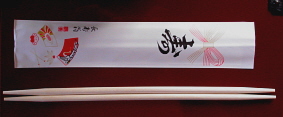
Both ends of the chopsticks for New Year holidays become narrow to share New Year's dishes with the deity of the year.
Swiss roll containing bean paste and printed a pattern of the rabbit.
This is the year of the Rabbit, according to the Chinese zodiac. Each of the 12 Chinese zodiac signs is related to a characteristic animal such as a rabbit and a tiger.
Decades ago, everything was closed during the first three days of the new year. In the Edo Period, most commoners spent all day doing nothing on New Year's Day.
They got some water from a well in the early morning, made soup containing vegetables and rice cakes for New Year's Day called ozouni(お雑煮) and drunk New Year's spiced sake called toso(屠蘇) on New Year's Day.
They were not supposed to clean their house, got angry and scold a servant during the first three days of the new year.
Merchants and artisans worked late into the night on New Year's Eve and got a lot of rest on New Year's Day.
Meanwhile, feudal lords had to visit a shogun for New Year's greetings at seven a.m. on New Year's Day.
One year has passed since I started this blog.
Thank you and best wishes for a happy new year.
Happy New Year!
Few people could see the new year's first sunrise because it was a snowy or rainy New Year's Day in many areas. People also saw the sunrise in the Edo Period.
Many people visited a shrine or a temple today.
I slept in, ate New Year's dishes, got New Year's cards and sent replies to them.
Ready-made New Year's dishes. These include many untraditional ingredients.
Both ends of the chopsticks for New Year holidays become narrow to share New Year's dishes with the deity of the year.
Swiss roll containing bean paste and printed a pattern of the rabbit.
This is the year of the Rabbit, according to the Chinese zodiac. Each of the 12 Chinese zodiac signs is related to a characteristic animal such as a rabbit and a tiger.
Decades ago, everything was closed during the first three days of the new year. In the Edo Period, most commoners spent all day doing nothing on New Year's Day.
They got some water from a well in the early morning, made soup containing vegetables and rice cakes for New Year's Day called ozouni(お雑煮) and drunk New Year's spiced sake called toso(屠蘇) on New Year's Day.
They were not supposed to clean their house, got angry and scold a servant during the first three days of the new year.
Merchants and artisans worked late into the night on New Year's Eve and got a lot of rest on New Year's Day.
Meanwhile, feudal lords had to visit a shogun for New Year's greetings at seven a.m. on New Year's Day.
One year has passed since I started this blog.
Thank you and best wishes for a happy new year.
Friday, December 31, 2010
New Year's Eve
I got tired today.
We traditionally eat toshikoshi soba(年越し蕎麦:year-end buckwheat noodles) on New Year's Eve. This custom was already common by the middle of the Edo period, but its origin is unclear. Deep-fried shrimps for toshikoshi soba are also sold now.
These are confections containing buckwheat flour.
Soba-joyo manju(そば薯蕷饅頭)
Steamed buns filled with sweat bean paste. It contains buckwheat flour, rice flour and yam.
Soba bolo(そばぼうろ)
The name bolo is derived from the Portuguese word "bolo" meaning a cake. Soba bolo is a cookie containing buckwheat flour.
Visitors or monks ring the bell at Buddhist temples to remove the 108 worldly desires which humans have at the night of New Year's Eve. It's called Joya no Kane(除夜の鐘). They do it 107 times at the night and just one time after midnight on January 1st.
I can hear the bell ringing near my house.
NHK broadcasts its Year-end Grand Song Festival(紅白歌合戦, Kouhaku Utagassen) every year on New Year's Eve. It is held as a counterbalancing struggle and dates back to 1951. It started at 7:30 p.m. and ended at 11:45 p.m. this year.
This program has received audience ratings of around 80 percent, but viewer ratings have dropped to around 40 percent or lower now. Singers of various ages and genres take part in this festival.
Many people visit a Shinto shrine or a Buddhist temple during the New Year's holidays after the midnight of New Year's Day in order to make traditional New Year's wishes for health and happiness. Many people leave home at the evening of New Year's Eve to visit a shrine or a temple at the midnight of New Year's Day.
We traditionally eat toshikoshi soba(年越し蕎麦:year-end buckwheat noodles) on New Year's Eve. This custom was already common by the middle of the Edo period, but its origin is unclear. Deep-fried shrimps for toshikoshi soba are also sold now.
These are confections containing buckwheat flour.
Soba-joyo manju(そば薯蕷饅頭)
Steamed buns filled with sweat bean paste. It contains buckwheat flour, rice flour and yam.
Soba bolo(そばぼうろ)
The name bolo is derived from the Portuguese word "bolo" meaning a cake. Soba bolo is a cookie containing buckwheat flour.
Visitors or monks ring the bell at Buddhist temples to remove the 108 worldly desires which humans have at the night of New Year's Eve. It's called Joya no Kane(除夜の鐘). They do it 107 times at the night and just one time after midnight on January 1st.
I can hear the bell ringing near my house.
NHK broadcasts its Year-end Grand Song Festival(紅白歌合戦, Kouhaku Utagassen) every year on New Year's Eve. It is held as a counterbalancing struggle and dates back to 1951. It started at 7:30 p.m. and ended at 11:45 p.m. this year.
This program has received audience ratings of around 80 percent, but viewer ratings have dropped to around 40 percent or lower now. Singers of various ages and genres take part in this festival.
Many people visit a Shinto shrine or a Buddhist temple during the New Year's holidays after the midnight of New Year's Day in order to make traditional New Year's wishes for health and happiness. Many people leave home at the evening of New Year's Eve to visit a shrine or a temple at the midnight of New Year's Day.
Thursday, December 30, 2010
Around the end of the year
Many people went to Ame-yoko in Ueno to get the ingredients of New Year's dishes. I'm struggling to clean my house and make the preparations for New Year's festivities.
Mikawa Manzai(三河萬歳) is the folk performing art that a duo named Tayu(太夫) and Saizo(才蔵) celebrate the New Year using a comic dialogue and dance in Mikawa(now Aichi Prefecture). It has been designated a significant intangible folk cultural asset of the country.
Tayu from Mikawa chose a partner(Saizo) for manzai at the fair held in Nihonbashi around the 28th day of the 12th month during a short period in the Edo Period. Saizo were from the neighborhood of Edo(now Tokyo). They were allowed to act at Edo Castle or feudal lord's mansions and performed wearing a type of samurai's outfits.
Osan met a familiar Tayu on the run in "Daikyoji Mukashi-Goyomi(大経師昔暦)" by Chikamatsu Monzaemon(近松門左衛門).
In the Edo Period, sales and purchase on credit were standard business practice. Their pay days were the days before the festival days of the 3rd month, the 5th month, 9th month, the day before the Bon Festival in the 7th month and New Year's Eve.
Ihara Saikaku(井原西鶴) depicts battles between debtors and bill collectors on New Year's Eve in his book "Seken Munesanyo(世間胸算用)" published in 1692. These are not gloomy stories. Both of them are very tough to beat. Most commoners were shrewd.
The game was over at the dawn of New Year's Day, so bill collectors didn't collect from debtors on New Year's Day. People spent tranquil New Year's Holidays.
Concerts of Beethoven's Ninth Symphony - also known as "Daiku" in Japan - are held throughout Japan in December of each year. There are several theories about the origin of this custom.
It is said that the symphony was performanced for the first time in Japan on June 1st in 1918. German prisoners performanced it in a Japanese prison camp where 1000 German prisoners were placed.
They published newspapers, performanced plays, had concerts regularly and enjoyed various sports. They also passed on their excellent manufacturing techniques about dairy-products and sausages to local residents and built bridges.
Mikawa Manzai(三河萬歳) is the folk performing art that a duo named Tayu(太夫) and Saizo(才蔵) celebrate the New Year using a comic dialogue and dance in Mikawa(now Aichi Prefecture). It has been designated a significant intangible folk cultural asset of the country.
Tayu from Mikawa chose a partner(Saizo) for manzai at the fair held in Nihonbashi around the 28th day of the 12th month during a short period in the Edo Period. Saizo were from the neighborhood of Edo(now Tokyo). They were allowed to act at Edo Castle or feudal lord's mansions and performed wearing a type of samurai's outfits.
Osan met a familiar Tayu on the run in "Daikyoji Mukashi-Goyomi(大経師昔暦)" by Chikamatsu Monzaemon(近松門左衛門).
In the Edo Period, sales and purchase on credit were standard business practice. Their pay days were the days before the festival days of the 3rd month, the 5th month, 9th month, the day before the Bon Festival in the 7th month and New Year's Eve.
Ihara Saikaku(井原西鶴) depicts battles between debtors and bill collectors on New Year's Eve in his book "Seken Munesanyo(世間胸算用)" published in 1692. These are not gloomy stories. Both of them are very tough to beat. Most commoners were shrewd.
The game was over at the dawn of New Year's Day, so bill collectors didn't collect from debtors on New Year's Day. People spent tranquil New Year's Holidays.
Concerts of Beethoven's Ninth Symphony - also known as "Daiku" in Japan - are held throughout Japan in December of each year. There are several theories about the origin of this custom.
It is said that the symphony was performanced for the first time in Japan on June 1st in 1918. German prisoners performanced it in a Japanese prison camp where 1000 German prisoners were placed.
They published newspapers, performanced plays, had concerts regularly and enjoyed various sports. They also passed on their excellent manufacturing techniques about dairy-products and sausages to local residents and built bridges.
Wednesday, December 29, 2010
preparations for New Year's festivities
December 28th was the last working day of the year for most public servants. Many people return to their hometowns, so expressways and trains are extremely crowded.
Supermarkets are overflowing with food and decorative objects for New Year's day. We can't find Christmas goods anywhere.
We are not supposed to place pine decorations for New Year's Day on December 29th and 31st, because nine(ku in Japanese) is commonly associated with suffering and decorating at the last minute is regarded as lack of sincerity.
People used to repaper shoji and reface the tatami in December. Fewer Japanese houses have tatami rooms and shoji(障子) which are screens made of a wooden frame with paper stretched over it.
Many people trim trees in their garden to make them look better toward the end of the year. In December, gardeners are so busy that they are fully booked. I have trees trimmed one or two months in advance.
Very few people pound rice at home at the end of a year and most rice cakes are put in airtight plastic bags now. When I was a child, a rice dealer brought our family freshly pounded rice cakes. So we ate soft rice cakes at the end of a year and did toasted or boiled ones on New Year's holidays.
Some people started getting ready for New Year's dishes.
Supermarkets are overflowing with food and decorative objects for New Year's day. We can't find Christmas goods anywhere.
We are not supposed to place pine decorations for New Year's Day on December 29th and 31st, because nine(ku in Japanese) is commonly associated with suffering and decorating at the last minute is regarded as lack of sincerity.
People used to repaper shoji and reface the tatami in December. Fewer Japanese houses have tatami rooms and shoji(障子) which are screens made of a wooden frame with paper stretched over it.
Many people trim trees in their garden to make them look better toward the end of the year. In December, gardeners are so busy that they are fully booked. I have trees trimmed one or two months in advance.
Very few people pound rice at home at the end of a year and most rice cakes are put in airtight plastic bags now. When I was a child, a rice dealer brought our family freshly pounded rice cakes. So we ate soft rice cakes at the end of a year and did toasted or boiled ones on New Year's holidays.
Some people started getting ready for New Year's dishes.
Monday, December 27, 2010
snow
In Yokohama, the first ice of the year has been seen on December 25th. We had the first frost on December 18th. It snowed in many areas.
Hatsuyuki(初雪:first snow of the season)
Komoriyuki(こもり雪)
Nadare-yukiwa(なだれ雪輪)
下中菜穂,「切り紙 もんきり遊び」,株式会社宝島社,2007年,P.10,11.
Nabo Shimonaka, Kirigami Monkiri-asobi,(Tokyo:TAKARAJIMASHA,Inc.,2007),P.10,11.
The 11th lord of the Koga Domain, Doi Toshitsura(土井 利位) published "Sekka Zusetsu(雪華図説)" in 1833. He observed snow crystals under a microscope and outlined them through illustrations in his book.
Yukiwa(雪輪) is a traditional design that represents snow.
Winter vacation started at schools.
I've found a blossom of the Japanese apricot in my garden.
People used to leave only one kaki fruit on the tree to pray for an abundant harvest. The kaki fruit is called Kimamori(木守).
Dried persimmons are available from mid-December.
Hitomaro(人麻呂)
These confections represent dried persimmons.
Hatsuyuki(初雪:first snow of the season)
Komoriyuki(こもり雪)
Nadare-yukiwa(なだれ雪輪)
下中菜穂,「切り紙 もんきり遊び」,株式会社宝島社,2007年,P.10,11.
Nabo Shimonaka, Kirigami Monkiri-asobi,(Tokyo:TAKARAJIMASHA,Inc.,2007),P.10,11.
The 11th lord of the Koga Domain, Doi Toshitsura(土井 利位) published "Sekka Zusetsu(雪華図説)" in 1833. He observed snow crystals under a microscope and outlined them through illustrations in his book.
Yukiwa(雪輪) is a traditional design that represents snow.
Winter vacation started at schools.
I've found a blossom of the Japanese apricot in my garden.
People used to leave only one kaki fruit on the tree to pray for an abundant harvest. The kaki fruit is called Kimamori(木守).
Dried persimmons are available from mid-December.
Hitomaro(人麻呂)
These confections represent dried persimmons.
Saturday, December 25, 2010
Christmas
December 23th was the Emperor's 77th birthday. The Emperor's Birthday(天皇誕生日, Tenno tanjobi) has been a national holiday since 1989. People are allowed to enter the Imperial Palace to offer their congratulations to the Emperor on this day. The Imperial family is facing many worries.
Many people engage in festive activities on Christmas Eve, but many middle-aged and older people sit about on the day.
At this time every year, The Christmas lights are beautiful. Even in my town, I saw more illuminated houses. I used to enjoy these illuminations while dog-walking. I often saw some women with their dogs around 11 o'clock at night in my town.
The illuminations were reduced around 10 o'clock at night and after Christmas Day in my town. I always went for a night or midnight walk with my dog on weekdays, so I was disappointed at darkened houses. I got excited when I saw flickers of light on a small Christmas tree by the window at midnight.
The tree in a garden was illuminated with lights from the end of December to February. It was a comfort to watch these lights at the coldest time of the year.
Many Japanese-style confection stores sell confections for Christmas.
Christmas tree

It will be a snowy Christmas in many areas.
Many people engage in festive activities on Christmas Eve, but many middle-aged and older people sit about on the day.
At this time every year, The Christmas lights are beautiful. Even in my town, I saw more illuminated houses. I used to enjoy these illuminations while dog-walking. I often saw some women with their dogs around 11 o'clock at night in my town.
The illuminations were reduced around 10 o'clock at night and after Christmas Day in my town. I always went for a night or midnight walk with my dog on weekdays, so I was disappointed at darkened houses. I got excited when I saw flickers of light on a small Christmas tree by the window at midnight.
The tree in a garden was illuminated with lights from the end of December to February. It was a comfort to watch these lights at the coldest time of the year.
Many Japanese-style confection stores sell confections for Christmas.
Christmas tree
It will be a snowy Christmas in many areas.
Wednesday, December 22, 2010
the winter solstice
People in Japan eat pumpkins and take yuzu bath in an effort to protect the body against the cold winter on day of the winter solstice.
We boil pieces of a pumpkin while keeping its shape better.
Yuzu(柚子:Citrus junos)
The yuzu tree in my garden is bearing a lot of fruit now. Its young leaves are bitten by two kinds of swallowtail butterfly larvae, but only old boughs bear fruits and I don't want the tree to become large. So I don't larvicide.
yuzu flower
Yubeshi(柚餅子)
Popular yubeshi is made by steaming a mixture of glutinous rice powder, miso(fermented soybean paste), soy sauce, sugar and water. It is often coated with oblate powder, but these are coated with kori-mochi because I was out of the powder. These include crushed walnuts.
Original yubeshi was made by stuffing a mixture of glutinous rice powder and miso into hollowed-out yuzu and steaming it as preserved foods or portable rations. It dates back around the end of the 12th century.
In the book named Nihon Saijiki(日本歳時記), Kaibara Ekiken(貝原益軒, 1630~1714) recommended to buy yuzu in the 11th month and make yubeshi and gave a recipe for making yubeshi.
It is thought to be close to Maru-yubeshi(丸柚餅子) in Wajima(輪島) of Ishikawa Prefecture, which is made by stuffing a mixture of glutinous rice powder and secret ingredients into hollowed-out yuzu, steaming it several times and lay out it to dry in the sun for four months. It is completed in spring. So maru-yubeshi is expensive.
Yuzu-kinton(柚子きんとん)
A confection using unripe yuzu.
Furofuki Daikon(風呂吹き大根)
I topped a piece of boiled daikon radish with sweet miso and yuzu zest.
We boil pieces of a pumpkin while keeping its shape better.
Yuzu(柚子:Citrus junos)
The yuzu tree in my garden is bearing a lot of fruit now. Its young leaves are bitten by two kinds of swallowtail butterfly larvae, but only old boughs bear fruits and I don't want the tree to become large. So I don't larvicide.
Yubeshi(柚餅子)
Popular yubeshi is made by steaming a mixture of glutinous rice powder, miso(fermented soybean paste), soy sauce, sugar and water. It is often coated with oblate powder, but these are coated with kori-mochi because I was out of the powder. These include crushed walnuts.
Original yubeshi was made by stuffing a mixture of glutinous rice powder and miso into hollowed-out yuzu and steaming it as preserved foods or portable rations. It dates back around the end of the 12th century.
In the book named Nihon Saijiki(日本歳時記), Kaibara Ekiken(貝原益軒, 1630~1714) recommended to buy yuzu in the 11th month and make yubeshi and gave a recipe for making yubeshi.
It is thought to be close to Maru-yubeshi(丸柚餅子) in Wajima(輪島) of Ishikawa Prefecture, which is made by stuffing a mixture of glutinous rice powder and secret ingredients into hollowed-out yuzu, steaming it several times and lay out it to dry in the sun for four months. It is completed in spring. So maru-yubeshi is expensive.
Yuzu-kinton(柚子きんとん)
A confection using unripe yuzu.
Furofuki Daikon(風呂吹き大根)
I topped a piece of boiled daikon radish with sweet miso and yuzu zest.
Sunday, December 19, 2010
Asakusa Toshi no Ichi
Asakusa Toshi no Ichi(浅草歳の市:Asakusa Year-end Fair) was held on the grounds of Sensoji Temple(浅草寺) from December 17th to 19th.The fair has been famous since the Edo period. It is said that the fair started in 1659. New Year's decorations and kitchen utensils were sold at the fair. It is said that the grounds were overflowing with people. Now the fair is famous as a battledore fair. One side of the hagoita(battledore) is decorated with a padded cloth picture of characters from Kabuki dramas.
Hanetsuki(羽根突き) is a traditional New Year's game similar to badminton. It is played with a wooden battledore and a hard black seed to which feathers have been attached like a shuttlecock. Some people say it came from a Chinese play, but there are several possible origins of it.
Hanetsuki first appeared in a book "Kanmon-gyoki(看聞御記)" in 1432. A book published in 1444 says Hagoita was used at New Year's.Hagoita was also called Kogiita(胡鬼板).
Some people say Kogi(胡鬼) meant a dragonfly in ancient China, a ball with feathers looks like a mosquito and dragonflies prey on mosquitos that carry diseases, so Hanetsuki was held to wish to protect children from mosquito bites at New Year's.
Some say that Tsukubane(衝羽根:Buckleya lanceolata) was used as a shuttlecock in the Muromachi Period(1338-1573) and it was called Kogi.
The seed of soapberry(無患子, mukuroji) was used as the ball of a shuttlecock, because mukuroji means children who stay free of disease.
Hagoita portraying Sagicho(左義長), which is one of the New Year holiday events, were used as a gift or a wedding gift by aristocrats.
Hanetsuki became popular around the end of around the end of the seventeenth century and hagoita were sold as a toy for New Year's Holidays at year-end fairs.
In the late Edo period, hagoita decorated with a padded cloth picture became very popular.
On the first New Year's Day of a girl, people presented hagoita to her parents to drive away evil spirits .
羽子板・揚巻 デザイン:弓岡勝美
"Hagoita Agemaki" designed by Katsumi Yumioka.
Agemaki is a courtesan and appears as the lover of Sukeroku(助六) in a Kabuki play named Sukeroku Yukari no Edozakura(助六由縁江戸桜), one of the Ichikawa family's repertoire comprising 18 classical Kabuki pieces(歌舞伎十八番).
Katsumi Yumioka, Chirmen no Oshie to Tsuribina to Temari (Tokyo:NIHON VOGUE-SHA.Co,Ltd.,2002),P.57.
弓岡勝美著,ちりめんの押絵とつり雛と手まり(東京:日本ヴォーグ社,2002年),p57.
Hanetsuki(羽根突き) is a traditional New Year's game similar to badminton. It is played with a wooden battledore and a hard black seed to which feathers have been attached like a shuttlecock. Some people say it came from a Chinese play, but there are several possible origins of it.
Hanetsuki first appeared in a book "Kanmon-gyoki(看聞御記)" in 1432. A book published in 1444 says Hagoita was used at New Year's.Hagoita was also called Kogiita(胡鬼板).
Some people say Kogi(胡鬼) meant a dragonfly in ancient China, a ball with feathers looks like a mosquito and dragonflies prey on mosquitos that carry diseases, so Hanetsuki was held to wish to protect children from mosquito bites at New Year's.
Some say that Tsukubane(衝羽根:Buckleya lanceolata) was used as a shuttlecock in the Muromachi Period(1338-1573) and it was called Kogi.
The seed of soapberry(無患子, mukuroji) was used as the ball of a shuttlecock, because mukuroji means children who stay free of disease.
Hagoita portraying Sagicho(左義長), which is one of the New Year holiday events, were used as a gift or a wedding gift by aristocrats.
Hanetsuki became popular around the end of around the end of the seventeenth century and hagoita were sold as a toy for New Year's Holidays at year-end fairs.
In the late Edo period, hagoita decorated with a padded cloth picture became very popular.
On the first New Year's Day of a girl, people presented hagoita to her parents to drive away evil spirits .
羽子板・揚巻 デザイン:弓岡勝美
"Hagoita Agemaki" designed by Katsumi Yumioka.
Agemaki is a courtesan and appears as the lover of Sukeroku(助六) in a Kabuki play named Sukeroku Yukari no Edozakura(助六由縁江戸桜), one of the Ichikawa family's repertoire comprising 18 classical Kabuki pieces(歌舞伎十八番).
Katsumi Yumioka, Chirmen no Oshie to Tsuribina to Temari (Tokyo:NIHON VOGUE-SHA.Co,Ltd.,2002),P.57.
弓岡勝美著,ちりめんの押絵とつり雛と手まり(東京:日本ヴォーグ社,2002年),p57.
Subscribe to:
Posts (Atom)