Events:
Cherry Blossom Forecast 2026
https://www.japan-guide.com/sakura/
https://n-kishou.com/corp/news-contents/sakura/?lang=en
https://sakura.weathermap.jp/ (Japanese version only)
https://tenki.jp/sakura/expectation/ (Japanese version only)
https://www.otenki.jp/sp/art/sakura/?pg=11 (Japanese version only)

when and where to see fall foliage(Japanese version only):
https://hanami.walkerplus.com/
https://sp.jorudan.co.jp/hanami/

Sunday, September 15, 2024

The 71st Japan Traditional Kogei(Art Crafts) Exhibition

 The 71st Japan Traditional Kogei Exhibition(日本伝統工芸展) is taking place at Mitsukoshi department store in Tokyo from September 11 to 23. The exhibition requires the applicants to create sophisticated design based on high degree of professional skill in Japanese traditional techniques.

See the Japan Kogei Association site for further information:
https://www.nihonkogeikai.or.jp/ (Japanese version only)


The Exhibition will travel through the following venues:

Mitsukoshi Nihonbashi Main Store, Tokyo
(event hall, Main building 7F)
September 11-23, 2024
Mitsukoshi Nihonbashi Main Store:
https://www.mistore.jp/store/nihombashi.html

Takashimaya Kyoto Store, Kyoto City, Kyoto Prefecture
October 9-14, 2024
Takashimaya Kyoto Store:
https://www.takashimaya.co.jp/kyoto/departmentstore/index.html


Takashimaya Osaka Store, Osaka Prefecture
(grand hall 7F)
October 16-21, 2024
Takashimaya Osaka Store:
https://www.takashimaya.co.jp/osaka/


Ishikawa Prefectural Museum of Art, Kanazawa City, Ishikawa Prefecure
October 25-November 4, 2024
Ishikawa Prefectural Museum of Art:
https://www.ishibi.pref.ishikawa.jp/e_home/


the Okayama Prefectural Museum of Art, Okayama City, Okayama Prefecture
November 21-December 8, 2024
The Okayama Prefectural Museum of Art:
https://okayama-kenbi.info/


Shimane Art Museum, Matsue City, Shimane Prefecture 
December 11-25, 2024
Shimane Art Museum:
https://www.shimane-art-museum.jp/en/


the Kagawa Museum, Takamatsu City, Kagawa Prefecture
January 2-19, 2025
The Kagawa Museum:
https://www.pref.kagawa.lg.jp/kmuseum/kmuseum/index.html


Mitsukoshi Sendai Store, Sendai City, Miyagi Prefecure
January 23-27, 2025
Mitsukoshi Sendai Store:
https://www.mitsukoshi.mistore.jp/sendai.html


Mitsukoshi Fukuoka Store, Fukuoka City, Fukuoka Prefecture
February 5-10, 2025
Mitsukoshi Fukuoka Store:
https://www.iwataya-mitsukoshi.mistore.jp/mitsukoshi.html


Furukawa Art Museum, Nagoya City, Aichi Prefecture
February 13-16, 2025
Furukawa Art Museum:
https://www.furukawa-museum.or.jp/


Hiroshima Prefectural Art Museum, Hiroshima City, Hiroshima Prefecture
February 19-March 9, 2025
Hiroshima Prefectural Art Museum:
https://www.hpam.jp/museum/

Wednesday, February 28, 2024

2024 Noto Earthquake (3)

15. Wajima-nuri lacquerware
Wajima-nuri is representative high-grade lacquerware of Japan. Nothing says Japanese lacquerware like Wajima-nuri. There were many homes with Wajima-nuri workshops along the Asaichi Street. It is estimated that the earthquake left 70% of about 1000 workers related to Wajima-nuri homeless. One of the workshops has resumed the production of lacquerware in Kanazawa.

Wajima-nuri lacquerware
Copyright: 
Ishikawa Prefectural Tourism League

Wajima-nuri lacquerware will be sold in some fairs.

"Wajima-nuri wo Tsunagu" is being held in KINTETSU Nara store  from Feb.27.

At an event "WAJIMANOMIRAI", 600 items by 19 workshops will be on display.
March 5-    Daimaru Shinsaibashi Store, Osaka City, Osaka Prefecture
April 10-   Mitsukoshi Nihonbashi Main Store, Tokyo Prefecture

Some of the workshops have websites.  Wajima Kirimoto reopened their online store on Jan.7, 2024. Taya Shikkiten has launched a crowd funding page for workers related to Wajima-nuri.

Wajima Kirimoto:

Taya Shikkiten:

16. Ama(female divers)
Ama(female divers) in Wajima City is designated as an important intangible folk-cultural property. They detach seafood such as abalone, turban shells, and seaweed called ego from the rocks under water holding their breath for 50-60 minutes. The divers do skin diving around Hegurajima island and off Wajima Port.

Ama around Hegurajima island 
Copyright: Ishikawa Prefectural Tourism League


This summer it will be hard for the divers to get seawfood in the sea of Wajima due to ground uplift and damaged facilities such as Wajima Port, boats, commercial refrigerators, and pumping machineries. They have to get a new seafloor terrain changed by ground uplift to get fertile seabed into their heads and to shirk danger. 
The number of the woman divers is about 170, but the divers now 60 and older currently constitute the majority. Two-thirds of of the divers have stayed in some areas away from Wajima City. Ama throughout the country are providing support for  them.

17. Suzu ware
I associate Suzu ware with Suzu City. Suzu ware was produced during the late 12th and late 15th centuries. The ware having a heritage from ancient earthen vessel was widely distributed, but it disappeared rapidly. In the 1970s, the local government and a local chamber of commerce were engaged in the reconstruction effort of Suzu ware.


Suzu ware
Copyright: Ishikawa Prefectural Tourism League

All of the 18 pottery kilns were collapsed by the quake. Brick-built kilns are weak against earthquakes. A potter's kiln was collapsed by the earthquake in May last year. He rebuilt his kiln in October, but it collapsed again. It takes a few years for  potters to restart pottery production.
Suzu City has been hit by series of earthquakes with seismic intensity 5 upper in 2007, seismic intensity 6 lower in 2022, seismic intensity 6 upper in 2023, seismic intensity 6 upper in 2024. A potter with 32 year career is contemplating retirement.

Suzu ware
Copyright: Ishikawa Prefectural Tourism League


18. salt making
In Suzu City, some saltworks make salt by boiling down seawater by means of traditional salt-making method called Agehama-style having a more than 400-year-old history. Though the salt contains rich dietary minerals, the method takes quite a bit of work. 
Since the coastline was moved distances of 100m out to sea, the facilities to pump water from the sea don't work at all. (Some saltworks draw water from the sea and move it by humans.) On Feb. 8, one of the saltworks restarted their work. They have accepted more online orders than in the past year.

19.livestock business
Many farmers raise their livestock in the area. They are struggling to water their livestock during water outage. The quake crashed or damaged some cattle barns. Some of them consider selling their livestock. One of them resumed shipments on Feb. 13.

20. agriculture
Effects on agriculture will come to the surface from now. Many paddy fields, crop fields and irrigation channel were damaged. Farmers can't let water flow to a rice field. 
The rice terraces of Shiroyone Senmaida is full of cracks. They have launched a crowd funding page.


pre-quake Shiroyone Senmaida
Copyright: Ishikawa Prefectural Tourism League


The power is out  in the area around the paddy fields, but solar panels generate enough electricity to power the lights of the rice terraces now.


pre-quake Shiroyone Senmaida
Copyright: Ishikawa Prefectural Tourism League


21. sightseeing
Kanazawa is safe. Visitors are welcomed there. However, 21st Century Museum of Contemporary Art, Kanazawa will reopen entirely late June.
The number of confirmed demolished or partially destroyed accommodations rose to 88 in Ishikawa prefecture. The quake damaged 54 accommodations in Niigata, 63 in Totama, 4 in Fukui, 1 in Gifu. There was no personal damage.

THE OFFICIAL ISHIKAWA TRAVEL GUIDE by Ishikawa Prefectural Tourism League:

 22. Wakura Onsen
Wakura Onsen (和倉温泉) is a hot spring resort town with 22 accommodations in Nanao City. All of the accommodations are closed due to the damage caused by the quake. Some of damaged hotels accept only disaster recovery workers, but the hotels provide only rooms without meals. The workers don't have access to flush toilets, to take a bath.
They have launched a crowd funding page.

Wakura Onsen Tourism Association, Wakura Onsen hotel cooperative association:

In 2023, Kagaya in Wakura Onsen was selected as the best accommodation in Japan. They won the first prize 41 times. They advanced into Taiwan in 2010.


pre-quake Wakura Onsen
Copyright: Ishikawa Prefectural Tourism League

23. Notojima Aquarium
Two whale sharks died of broken aquarium filtration apparatus and water leak in the Notojima Aquarium damaged by the quake. They evacuated their breeding animals to another aquaria and zoos. Japan Aquarium Association(JAA) has launched a crowd funding page for the aquarium. Japanese Association of Zoological Gardens and Aquariums(JAZA) is accepting relief money for the aquarium.

Japan Aquarium Association(JAA)(Japanese version only):

pre-quake Notojima Aquarium
Copyright: Ishikawa Prefectural Tourism League


pre-quake Notojima Aquarium
Copyright: Ishikawa Prefectural Tourism League


pre-quake Notojima Aquarium
Copyright: Ishikawa Prefectural Tourism League

24. tax payment
Many evacuees who concerned about payment of income tax sent inquiries to Kanazawa Regional Taxation Bureau. The bureau issued a rare statement to set their lives back above tax payment.


Tuesday, February 27, 2024

2024 Noto Earthquake (2)

5.landslides
Landslide makes a rescue difficult. landslide is associated with a risk of secondary disaster. Rescuers have to make an wide search of the landslide site.
The landslides completely destroyed 57 houses, half destroyed 33 houses, and partially destroyed 17 houses. There were 389 landslides in Ishikawa Prefecture, 18 in Niigata Prefecture, 13 in Toyama Prefecture.

A 38-year-old man was on the second floor. Shortly after the quake occurred, his house got caught in a landslide. Though he escaped from rubble, his father and mother, his sister and her son on the second floor were buried in mud. His mother and sister were found the following day. His father and his nephew were found on Jan. 6. When they were discovered, his father was wrapping his arms around his nephew.  
A 52-year-old man lost his wife and his four children, his wife's parents, his wife's brother and his wife and his son due to a landslide. He had remained in Kanazawa for his work. His wife and his children used to return her wife's home to celebrate the New Year every year. He was scheduled to join them on Jan. 1. One of his sons worked as a cook and made New Year's foods. He had been looking forward to eating them.

6. Fire in Wajima
Wajima Morning Market(Wajima Asaichi), one of the three major morning markets in Japan, had been held in the center of Wajima City almost every day. The market stalls had lined both sides of the Asaichi Street with an overall length of 360m.

pre-quake Asaichi Street
Copyright: Ishikawa Prefectural Tourism League


The fire broke out in a single place. According to Fire and Disaster Management Agency, the fire in the center of Wajima City started from the electrical wiring damaged by the quake. The area spanning 49000 square meters with about 240 buildings was destroyed by a massive fire. Firefighters received a call at 5:23 p.m. on Jan. 1.
Fire hydrants in the area were not available due to water outage. A nearby river was nearly dried up due to ground uplift. They couldn't gain access to a fire cistern due to scattered rubble. Pumping water from the sea was not permitted because the highest-level tsunami warning was given. Finally they pumped water through some hoses connected to the water source, such as school's pool water, a fire cistern in a distant place. They completely extinguished all the fire at 5:10 p.m. on Jan. 6.
The victims stuck in the rubble were caught by flames. Their family members kept on saying to the victims comfortingly until much closer to fire, but they left the scene with the utmost reluctance. As of Jan. 31, according to the National Police Agency, 12 victims were unknown causes of death. All of them were found in Wajima City. The bodies were presumed found in the ruins of the fire. It is inferred that the cause of death in charred victims could not be determined. 

Fire occured in 17 spots in Ishikawa, Toyama, Niigata prefectures. As of Jan. 31, According to the National Police Agency, three people were burned to death. The number of fire-related deaths is previously unannounced.

Wajima Morning Market(Wajima Asaichi) will be held in Kanazawa on March 23. The market is considerd to be held on a regular basis.

A photo studio along the Asaichi Street in Wajima City burnt down, but they transmitted image data for a school yearbook to a local printer before the quake. On March 1, graduates of the school  will receive their yearbooks.

7.road damage
There were so many roads damaged by the quake and landslides that 30% of them are under repair. National Route 259 is the important transport artery. As of Feb. 22, eight parts of National Route 259 have been closed due to 2 landslides, 4 slope collapses, a tunnel damage, and a road damage. Two parts of an expressway have been closed. Three parts of another two national routes have been closed due to a landslide and road damages. Forty-six parts of prefectural roads have been closed.

Some small villages are situated in the mountains. Without a road to other areas, 3345 villagers of 24 villages  were stranded in the aftermath of the earthquake. Some members of the Self-Defense Forces and some villagers went on foot to the villages to deliver emergency relief goods. As of Feb. 13, all of the villages have come out of isolation.

8. lifeline damage
As of Feb. 22, about 22510 houses are out of water in Ishikawa Prefecture. As of Feb. 9, 92% of all sewers was still damaged in Suzu City. The power and the gas are back in most areas. Communication services are recovered outside Wajima City and Suzu City. The Noto Airport resumed service.
Railroad tracks of the Noto Railway and JR Nanao line were damaged by the quake. 
About half of the Noto Railway's tracks and all tracks of JR Nanao line were repaired.  The train  services of  JR Nanao line and Noto Railway between Wakura Onsen and Noto-Nakajima reopened on Feb. 15. The rest of tracks are repairing, with bustitution from Noto-Nakajima to Anamizu.

9. shelters
Since the evacuees included many non-residents, some shelters exceeded their capacity at first. 
In a shelter, a mother told her two children that they could do a weep once a day.
Crying is infectious. If someone cry there, another evacuees will dissolve into tears.
One of the children said, "I shed tears for today."

Now evacuees themselves are runnunng a shelter by helping each other. They go to work, go to school, go to their damaged homes to search for something important or to clear up a mess during daytime.
Some mobile laundry trailers, some mobile toilet trailers, seven mobile pharmacy trucks, a mobile medical clinic for pets worked or are working now. Of course many food trucks have served food at shelters.

According to Japan Broadcasting Corporation(NHK), as of Feb. 12, 6000 took refuge at the homes of relatives, 4000 have remained at their homes, 120  have spent nights in their cars, about 930 people of the evacuees fled temporarily to 30 prefectures other than Ishikawa Prefecture. Other places such as meeting places, plastic greenhouses(!) also have been used as shelters. Many evacuees prefer to remain in familiar territory. They have to clear up their houses, are afraid of sneak-thieving, and are unwilling to do long-distance commuting. 


10. disaster-related death 
There are growing concerns about disaster-related death of older people.
On Feb. 7, 15 victims died of disaster-related death. Disaster-related deaths can be caused by physical deconditioning due to  a cataclysmic situation by coldness, worsening of chronic disease, disruption of healthcare delivery services, psychological stress. 
The local government encourages to move to safe shelters including hotels and facilities outside the affected areas. However unfamiliar lands and people discomfort them. It is feared that older people become physically inactive and become demented due to environmental changes. It would be ideal if all the villagers including older people evacuate to a same shelter outside the affected areas. There are some cases that all the villagers went to a same accommodation such as a hotel in another area. They are allowed to stay there until early March. The prefecture offered them to move deemed temporary housing including public housing. As of Feb. 22, according to Ishikawa Prefecture, the number of evacuees by group locomotion from the Noto Peninsula rose to 930.

11. temporary housing
The local government is building regular relocation facilities. Though Wajima City has begun construction on to build 964 temporary houses, the number of applications is over 4140.

12. Exodus of students
Late January, about 400 junior high school students in Wajima City, Suzu City, Noto-cho went to Kanazawa and Hakusan cities and have studied in groups. Their schools have been used as shelters. The local government couldn't provide a favorable learning environment for students. Exodus of the students lessens the weight of their parents. Moreover, many students take an entrance exam from late January to early March.
All of the public elementary and junior high schools in Ishikawa Prefecture relaunched on Feb.6., but not all the students went to another areas in group. Some students have remained in the afflicted area and go to school from a shelter. Some moved to another areas with their families. Many of them have lived and studied with other students in Kanazawa and Hakusan cities. 

13. shelter with pets
There is few shelters for evacuees with pets in the affected area. Most of them have spend nights in a car or have remained in their damaged homes.
A man with his dog perished in a fire. He had remained at his home for his dog.

14. disaster recovery volunteer
Road damage and water outage is hampering activities of volunteers in worst-affected regions of Ishikawa Prefecture. The volunteer work is limited to 3-4 hours a day. Dozens of people started doing volunteer activities in Suzu City from Feb. 4, Wajima City from Feb. 10. The local government is trying secure sleeping places for supporting local officials, construction workers, volunteers. Individual volunteers have significant limitations. The volunteers and evacuees are doing disposal of huge volume disaster rubble.
The government started operation of sleeping facilities for volunteers in Anamizu-machi, Ishikawa Prefecture on Feb. 26.


Monday, February 26, 2024

2024 Noto Earthquake (1)

 Nearly two months have passed since 2024 Noto earthquake occurred on this New Year's Day. 
We do appreciate the kind offers of many countries.

We can't see the whole picture of damages by the earthquake yet.

February 18 was the day when Buddhist memorial services marked the 49th day after death were held in the affected areas.  It is thought that the souls of the dead alternate between the afterworld and this world during the seven weeks after death in most Buddhist sects. Most of them place the dead's ashes in their tombs on the day.
However, most temples in the affected areas remain damaged. Many tombstones, stone lanterns, shrine gates remain scattered.  A temple in Wajima City held a memorial service marked the 49th day after death on Feb. 18.  In kanazawa, chief priests of six temples in Suzu City jointly held memorial services.

On this New Year's Day I felt the house shake at my home, 300km away from the epicenter of the Noto earthquake.

New Year's Day is the most important and the most celebrated day in Japan. However the bereaved of the earthquake will never celebrate that day. New Year's Day in Japan is similar to Christmas.  Family members gather for celebration. It caused a lot of tragedy. Some fathers lost their wives, mothers, fathers and children in 10s and 20s. Some of them are the only survivors of their families.

Compared to the 2011 Great East Japan earthquake, Noto's earthquake-damaged regions are small in area. But Noto's damage is as serious as that of the 2011 Tohoku earthquake. At first the government misread the situation. Earthquake swarm has occurred in the Noto Peninsula over the past few years, but they didn't do much damage to the area. 

The roads have been destroyed, ground uplift interrupted maritime supply routes, therefore the peninsula became isolated. Rapid aging of the population amid extremely low birthrates are casting a dark shadow on the devastated areas. Ratio of elderly people at least 65 years old is 51.1% in Suzu City, 46.8% in Wajima City, two hard-hit cities. 

As of Feb. 15, According to Ishikawa Prefecture, 241 people lost their lives, 9 are missing. As of Feb. 22, according to the Cabinet Office, the number of evacuees is 12293 in 498 declared shelters in Niigata and Ishikawa prefectures. The number of confirmed demolished or partially destroyed houses rose to 76257 in five prefectures. In Ishikawa Prefecture, 8520 houses were completely destroyed, 8935 were half destroyed, 24781 were partially destroyed. The earthquake caused damage to Ishikawa, Niigata, Toyama, Fukui, Nagano, Gifu Prefectures.
The earthquake caused 102 deaths in in Wajima City, 103 in Suzu City, 20 in Anamizu-machi, 8 in Noto-cho, 5 in Nanao City, 2 in Shika-machi, 1 in Hakui City.

damage situation of 2024 Noto Peninsula Earthquake by
The Hidenori Watanabe Laboratory which belongs to the Graduate School of Information Studies at the University of Tokyo:


1. ground uplift
Since some part of the Noto peninsula was raised, the sea bottom was raised 2-4 meters above sea level. So a 90km coastline from Shika-machi to Suzu City in Ishikawa Prefecture was moved maximum distances of 240m out to sea. Therefore 15 fishing ports along the coastline have not worked. They have to be constructed from scratch. Only one quay wall can be used at Wajima Port. About 200 fishing boats in the ports can't put out to sea. Common ships could not land on the ports along the coastline, and only Japanese navy's hovercrafts could do. On Jan. 4, heavy machinery and emergency relief goods were at long last landed using the hovercrafts.

More than 169 fishing boats were capsized or stranded in Ishikawa, Toyama, Niigata, Fukui  prefectures. Fifty-eight of 69 fishing ports were damaged in Ishikawa Prefecture. A few fishing boats are shipping out fish in the Noto Peninsula.
Hokuriku Regional Development Bureau started dredging operations to secure the water depth to move or land ships at Wajima Port on Feb. 24.


2. tsunami
The first tsunami(4 meters in height) was estimated to arrive in some areas of Suzu City one minute after the earthquake. Tsunami height was not measured accurately at Wajima Port. The height is recorded by calculating sea surface height change, but the sea surface disappeared due to ground uplift. Tsunami arrived in Toyama Prefecture 90km away from Suzu City three minutes after the earthquake. It is presumed that that tsunami was caused by seafloor slide. The total area of the wet  surface is 190 hectares(1,900,000㎡) in Suzu City, Noto-cho, Shika-machi in Ishikawa Prefecture.

Most residents and non-residents went to higher ground shortly after the quake. Most of those who failed to escape survived.
A 67-year-old man and his 3 granddaughters were going to the higher ground shortly after the quake, the tsunami rushed toward them. They burst into a back shed, but tsunami rushed in the shed. Two granddaughters came to the surface to breathe by themselves. The grandpa groped for other granddaughter. Though she was unconscious, she came back to life with his artificial respiration.
A car passed close by an elder woman using a walking cane. The driver swung back toward her and picked her up. Tsunami rushed in the road shortly after he started to drive. 
Two people died of tsunami. A 54-year-old man was going to return home on the route to a shelter. His family members arrived safely at the shelter. A-79-year-old man who suffered cerebral infarction a few years ago and his son were going to evacuate to a shelter, but tsunami hit them. His son found himself alone. 
A 97-year-old man soaked by tsunami died from hypothermia or freezing temperatures while waiting for rescue.
Tsunami hit a lot of houses. 

3. ground liquefaction
The earthquake caused liquefaction in Niigata, Toyama, Ishikawa, Fukui prefectures.
Ground liquefaction damaged over 10000 houses in wet(ex-river), sandy soils of Ishikawa, Toyama, Niigata prefecture. Dozens of houses were completely destroyed by ground liquefaction.

4. collapse by shaking
Some people got out of their houses to look around soon after the first magnitude 7.3 earthquake occurred. After 13 seconds the second magnitude 7.3 earthquake squashed houses like a pancake. The Japanese intensity scale has 10 levels going from 0 to 7 (5 and 6 are divided into "weak" and "strong"). The second earthquake had a seismic intensity of 7 in some areas. There are still the old houses remaining along the street in the Noto Peninsula. The townscape with old wooden houses is beautiful, but they are not earthquake-proof buildings. Earthquake swarm may have damaged old wooden houses little by little. Suzu City has been hit by series of earthquakes with seismic intensity 6 lower in 2022, 6 upper in 2023, 6 upper in 2024. 
Some hospital buildings with earthquake-resistant structure were damaged with falling ceiling or scattering things by the quake. A hospital's main building with base isolators had no damage, without so much as scattering things. However, the base isolators are expensive.

As of Jan. 31, According to the National Police Agency, 92 people of 222 deaths were crushed to death, 49 were choked to death and died from respiratory failure, 32 died from hypothermia and freezing temperatures, 28 died from wound shock, 3 were burned to death, and 6 died due to other causes of death including crush syndrome. No one got drowned. The other 12 people died from some unknown  cause. Ninety-eight people were found in Wajima City, 95 in Suzu City. Victims aged 60 and older make up 67% of all deaths.

The fire department has received too many calls for help to handle. Dozens of victims waiting for rescue under the rubble died from hypothermia and freezing temperatures. Rescuers give priority to survivors who can answer rescuer's call. An elderly woman could make no reply to rescuers, and she was received a low priority. She was rescued a few days later but died soon.

On Jan. 6, a 93-year-old woman whose left foot was stuck in the rubble was rescued from the rubble in Suzu City 124 hours after the quake. Unfortunately, the condition of her left foot had deteriorated and died on Feb. 8. Her son said, "It comforted me that we could have a talk while in the hospital."

A 47-year-old woman and his father entered a new year together. She made traditional New Year's food and set them in three-tiered food boxes on New Year's Eve. Her daughter intended to come from Tokyo in the evening of Jan. 1. She works for a hotel. She said to him before she left, "Don't eat the food in the boxes." He often sneaked food. She was going to eat the New Year's food with him and her daughter. On New Year's Day she was at work in another area and couldn't get her home. In the evening of the next day, one of her childhood friend told her that He was found dead. She is searching for her family memorabilia from building rubble. She found two of three-tiered food boxes, but the one box is still missing. An old acquaintance said to her, "I would imagine that he ate the food in the box in heaven."

Some sets of shogi pieces(koma) found in a collapsed house in Suzu City were used at one of the eight major tournaments. Shogi is known as Japanese chess. The owner of the pieces had offered them to the tournament every year. His wife was found dead in the collapsed house.

A seven-story building laid on its side in Wajima City. Experts say strong vertical-shaking pulled up the stakes by pulling whole the building up, and strong horizontal-shaking toppled it over sideways. A soft-ground potentially contributed to its collapse. The detail of the bulding's collapse will be figured out. 
The building  crushed a izakaya(Japanese-style bar and restaurant), and a 48-year-old woman and a 19-year-old woman were crushed to death. A 55-year-old man who is their husband and father is searching for his family memorabilia from building rubble every day. He found his watch as a birthday present from her wife and her daughter's smartphone.
The survivors are still searching for their family memorabilia from building rubble.

However, more than 50 buildings in danger of collapse is due to be urgently demolished in Suzu City. On Feb. 26, the local government started to dismantle one of them.

Saturday, February 10, 2024

Lunar New Year

 February 10 is Lunar New Year (or Chinese New Year.) New Year celebrations are also held in chinatowns in Japan.  We celebrate the New Year in solar calendar.

I was going to post blog content on this New Year's Day, but 2024 Noto earthquake occurred. 

This year is the Year of the Dragon according to the Chinese zodiac.  Each of the 12 Chinese zodiac signs is related to a characteristic animal. The dragon is the god of water in East and South Asia.

You can see paintings and other representations of dragons.


Kennin-ji Temple(建仁寺) in Kyoto
Photo by sanographix

Rulers of the Heavens: Celebrating the Year of the Dragon, Kyoto national Museum, January 2–February 12


Yasaka Shrine

It is said that the main hall of Yasaka Shrine stands on the pond where the blue dragon lives.  


Kyoto Winter Special Openings 2024 

Syokoku-ji temple(相国寺) in Kyoto has a ceiling painting of dragon by Kano Mitsunobu(1565-1608). You hear an echo when you clap your hands under the ceiling.  It is known as Nakiryu(鳴き龍) because it sounds like a call of dragon.

Sennyu-ji temple(泉涌寺) in Kyoto also has a ceiling painting of dragon by Kano Sansetsu(1590-1651) that is open to the public in the year of the dragon and special occasions .

New Year's card(formal)


New Year's card(unformal)


"辰" means a dragon.


Ready-made traditional New Year foods called Osechi Ryori are set in three-tiered boxes.

Omedeta-ryu(おめでた竜)
handicraft kits by Takagi-seni Co., Ltd.
designed by Runa Okuda


Saturday, September 23, 2023

The 70th Japan Traditional Kogei-Art Crafts- Exhibition

 The 70th Japan Traditional Kogei Exhibition(日本伝統工芸展) is taking place at Mitsukoshi department store in Tokyo from September 13 to 25. The exhibition requires the applicants to create sophisticated design based on high degree of professional skill in Japanese traditional techniques.

I took a silverwork class a few decades ago. Its class teacher sent her work such as a silver flower vessel to the exhibition every year, but she passed away last December. Her works were accepted for the exhibition 39 times in a row. Her previous work is being released in this exhibition.

See the Japan Kogei Association site for further information:
https://www.nihonkogeikai.or.jp/ (Japanese version only)

Japan Traditional Kogei Exhibition:
https://www.nihonkogeikai.or.jp/exhibition/honten/(Japanese version only)
The Exhibition will travel through the following venues:


Mitsukoshi Nihonbashi Main Store, Tokyo
(event hall, Main building 7F)
September 13-25, 2023
Mitsukoshi Nihonbashi Main Store:
https://www.mistore.jp/store/nihombashi.html


Furukawa Art Museum, Nagoya City, Aichi Prefecture
October 5-9, 2023
Furukawa Art Museum:
https://www.furukawa-museum.or.jp/


Kyoto City KYOCERA Museum of Art, Kyoto City, Kyoto Prefecture
October 11-15, 2023
Kyoto City KYOCERA Museum of Art:
https://kyotocity-kyocera.museum/


Takashimaya Osaka Store, Osaka Prefecture
October 18-23, 2023
Takashimaya Osaka Store:
https://www.takashimaya.co.jp/osaka/


Ishikawa Prefectural Museum of Art, Kanazawa City, Ishikawa Prefecure
October 27-November 15, 2023
Ishikawa Prefectural Museum of Art:
https://www.ishibi.pref.ishikawa.jp/e_home/


the Okayama Prefectural Museum of Art, Okayama City, Okayama Prefecture
November 16-December 3, 2023
The Okayama Prefectural Museum of Art:
https://okayama-kenbi.info/


Shimane Art Museum, Matsue City, Shimane Prefecture 
December 6-25, 2023
Shimane Art Museum:
https://www.shimane-art-museum.jp/en/


the Kagawa Museum, Takamatsu City, Kagawa Prefecture
January 2-21, 2024
The Kagawa Museum:
https://www.pref.kagawa.lg.jp/kmuseum/kmuseum/index.html


Mitsukoshi Sendai Store, Sendai City, Miyagi Prefecure
January 24-29, 2024
Mitsukoshi Sendai Store:
https://www.mitsukoshi.mistore.jp/sendai.html


Mitsukoshi Fukuoka Store, Fukuoka City, Fukuoka Prefecture
February 7-12, 2024
Mitsukoshi Fukuoka Store:
https://www.iwataya-mitsukoshi.mistore.jp/mitsukoshi.html

Saturday, September 24, 2022

The 69th Japan Traditional Kogei-Art Crafts- Exhibition

 The 69th Japan Traditional Kogei Exhibition(日本伝統工芸展) is taking place at Mitsukoshi department store in Tokyo from September 14 to 26. The exhibition will be hold from September 14, 2022 to March 14, 2023. The exhibition requires the applicants to create sophisticated design based on high degree of professional skill in Japanese traditional techniques.

See the Japan Kogei Association site for further information:
https://www.nihonkogeikai.or.jp/ (Japanese version only)


The Exhibition will travel through the following venues:

Mitsukoshi Nihonbashi Main Store, Tokyo
September 14-26, 2022
Mitsukoshi Nihonbashi Main Store:


Hoshigaoka Mitsukoshi, Nagoya City, Aichi Prefecture
September 28- October 2, 2022
Hoshigaoka Mitsukoshi:
https://www.mitsukoshi.mistore.jp/hoshigaoka.html 


Kyoto Sangyo Kaikan Hall, Kyoto Prefecture
October 12-14, 2022
Kyoto Sangyo Kaikan Hall:
http://www.ksk.or.jp/ (Japanese version only)


Sapporo Mitsukoshi, Sapporo City, Hokkaido Prefecture
October 18-23, 2022
Sapporo Mitsukoshi:
https://www.mitsukoshi.mistore.jp/sapporo.html


Ishikawa Prefectural Museum of Art, Kanazawa City, Ishikawa Prefecure
October 28-November 6, 2022
Ishikawa Prefectural Museum of Art:
https://www.ishibi.pref.ishikawa.jp/e_home/


The Okayama Prefectural Museum of Art, Okayama City, Okayama Prefecture
November 17-December 4, 2022
The Okayama Prefectural Museum of Art:
https://okayama-kenbi.info/


Shimane Art Museum, Matsue City, Shimane Prefecture 
December 7-25, 2022
Shimane Art Museum:
https://www.shimane-art-museum.jp/en/


The Kagawa Museum, Takamatsu City, Kagawa Prefecture
January 2-16, 2023
The Kagawa Museum:


Mitsukoshi Sendai Store, Sendai City, Miyagi Prefecure
January 20-25, 2023
Mitsukoshi Sendai Store:
https://www.mitsukoshi.mistore.jp/sendai.html


Mitsukoshi Fukuoka Store, Fukuoka City, Fukuoka Prefecture
February 1-6, 2023
Mitsukoshi Fukuoka Store:
  

Hiroshima Prefectural Art Museum, Hiroshima City, Hiroshima Prefecture
February 15-March 5, 2023
Hiroshima Prefectural Art Museum:


Takashimaya Osaka Store, Osaka Prefecture
March 9-14, 2023
Takashimaya Osaka Store:


Thursday, January 13, 2022

Kanchu-mimai(winter greeting card)

 The period of mourning after the death of a parent lasts one year. So I didn't observe the New Year's festival and didn't send New Year's cards.

It's a custom for people in mourning period to send a mourning postcard at the end of the year. In general, receivers of the postcard don't send a New Year's card to the sender.


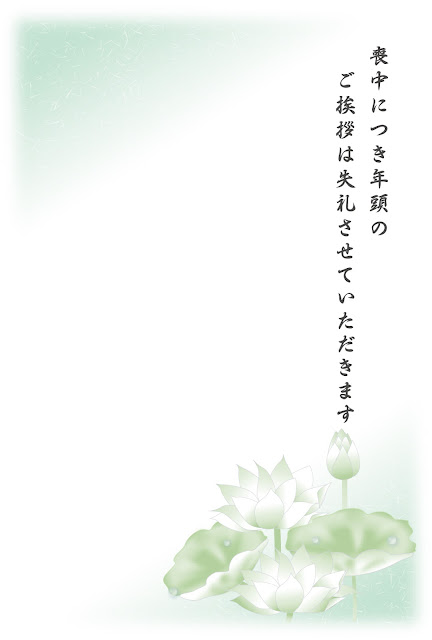
mourning postcard
"Since I am in mourning, I am not sending New Year cards this year"


Kanchu-mimai(寒中見舞い, a mid-winter greeting card) is mailed from Shokan(小寒, minor cold or moderate cold), the 23rd in 24 Solar Terms to the day before Risshun(立春, Spring commences), the first in the terms. Shokan is around January 5, and Risshun is around February 4.

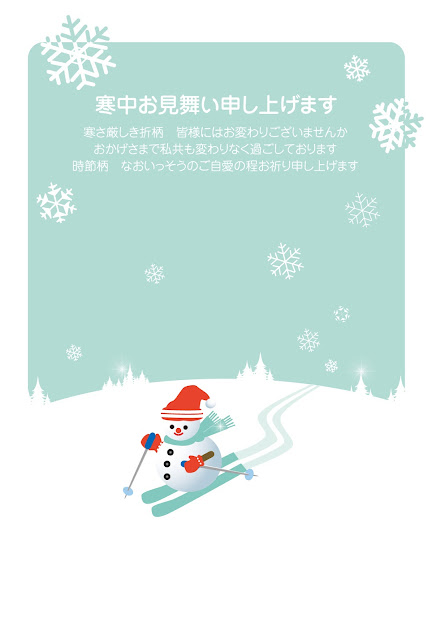
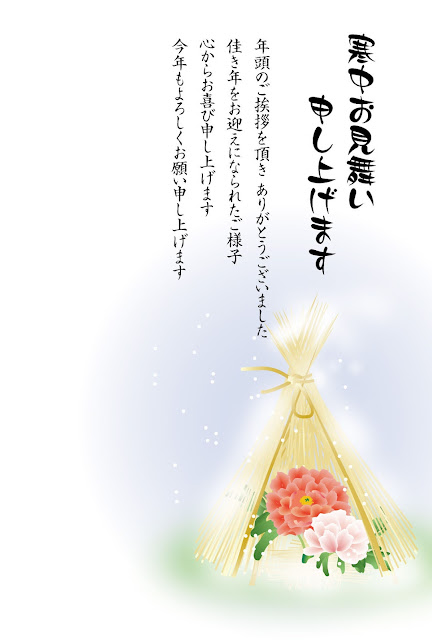
Kanchu-mimai card


Usually we mail New Year's cards until January 7. The greeting card is used as a reply to a New Year's card after January 7. 

Kanchu-mimai card
a reply to a New Year's card


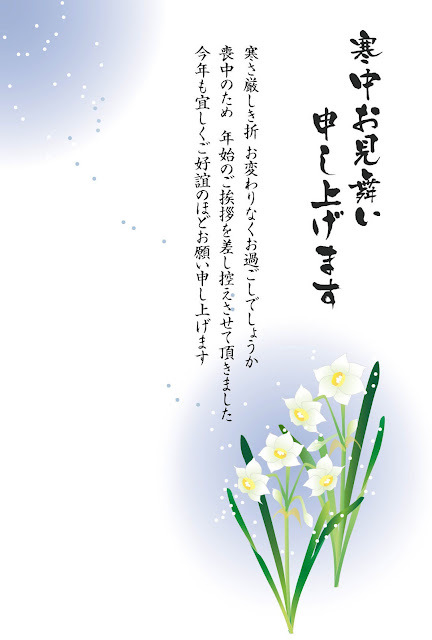
We also use the card as a substitute for New Year's cards in mourning period.

Kanchu-mimai card
a substitute for New Year's cards in mourning period


 For your information, Yokan-mimai(余寒見舞い) is mailed from Risshun to about the end of February in late winter. 

Yokan-mimai


Thursday, December 30, 2021

Japanese Buddhist funeral (2)

 Shijukunichi(四十九日) memorial service is a ceremony commemorating the 49th day after someone's death. It is said that Yama(the King of Hell) decides where a dead man is going on the 49th day after his death. 

He might (1)go to the celestial world(not eternal paradise), 
              (2)go to hell,
              (3)reincarnate as a human, 
              (4)reincarnate as a creature other than humans, 
              (5)be a Gaki (hungry ghost), 
              (6)be an asura in the everlasting battlefield
The dead reincarnate into the above six worlds many times.
Only those who attained moksha(enlightenment) can get out of this infinite loop.

We need to prepare a japanned spirit tablet with kaimyo by the day of Shijukunichi memorial service.

japanned and blank spirit tablet


On the day of Shijukunichi memorial service, we went to the family temple with the photo, the natural and japanned tablets, the urn. The priest read a sutra, we made an offering of incense at the temple's hall. Buddhist priests hold a ritual to transfer deceased person's soul from natural tablet to japanned tablet and the natural tablet is burnt thereafter.


SotSotoba(tall wooden tablet set up for the repose of the deceased) was put up by our family grave. Sotoba comes from the Sanskrit word "stupa." Bonji, a passage from sutras, kaimyo, date of death, chief mourner's name, placed date are written on the tablet. Bonji(梵字, the Siddham script) is a descendent of the Brahmi script and is used to write Sanskrit.
sotoba by grave


Bonji on sotoba

passage from sutra on sotoba


Her urn was placed in charnel room under the tombstone. The priest read a sutra in front of the grave. We offered some flowers, burned incense and joined our hands in prayer


Usually deceased person's relatives go to their family temple, and they have a meal after Shijukunichi memorial service.


Shotly after Shijukunichi memorial service, a chief mourner sends a gift called koden-gaeshi in return for a funeral offering. Generally, the monetary value of the koden-gaeshi often ranges from 30% to 50% of that of the koden. A greeting card enclosed in the koden-gaeshi represents thanks for attending the funeral and announces the end of the mourning period.


My family temple belongs to Shingon Buddhism, but people of all creeds can own their grave on the burial ground of the temple. The burial ground includes Shinto-style graves called "Okutsuki(奥津城)", graves of Korean nationals living in Japan. Shintoism adherents are mostly not allowed to build their graves on the grounds of  Shinto shrines because Shinto regards death and blood as Kegare(foulness). The population of Korean nationals living in Japan  is about 479,000. Perhaps surprisingly, many people build their graves before their death in Japan.


Japanese-style grave


foreign-type grave


foreign-type grave
A short epitaph is written on a tombstone.
There are no specific rules for epitaphs. 


A surname, "senzo-daidai-no-haka(先祖代々の墓, ancestral tomb)" or a passage from sutras are inscribed on a Japanese-style tombstone. A family crest is also etched.

senzo-daidai-no-haka


A passage from sutras is inscribed on a tombstone


We clean our family graves before prayer in the Bon Festival, visiting graves during the equinoctial week

As of December 31,2019, Shintoism adherents account for 48.6%, Buddhists account for about 46.3%, Christians account for 1.0%, and other religions make up 4.0% of Japan's population, according to a statistical study on religion conducted by the Agency for Cultural Affairs.

At the first bon festival following Shijukunichi memorial service, bereaved families suspend a white paper lantern at their entrance. They prepare the Bon festival, invite relatives and familiar persons, have a Buddhist priest read a sutra at their home. They make a monetary offering(Fuse) to the priest and serve a meal to the visitors. The white paper lantern is used only onetime. 

white paper lantern


My family temple's priest doesn't visit the houses of the temple's supporters. The temple performs Segaki(施餓鬼), which is a ritual to stop the suffering of the such restless ghosts/monsters as Gaki on August 1st. The deceased's families after more than 49 days after the deceased's death are asked to attend Segaki. The temple's supporters need to pay grave maintenance fee and the donation for segaki every year. At the first bon festival following Shijukunichi memorial service, they need to pay the higher donation for segaki than usual. Due to the COVID-19 pandemic, Segaki was performed behind closed doors for the second straight year. The priest posted video footage of him reading a sutra on YouTube. 

The period of mourning after the death of a parent lasts one year. So our family members won't observe the New Year's festival and won't send New Year's cards.

On the first anniversary of one's death, The deceased's family will invite relatives and familiar persons. A Buddhist priest will read a sutra, they will an offering of incense at the temple's hall. Then they will visit the family grave, offer some flowers, and burn incense at the grave and serve a meal to the visitors.

On the first anniversary of my mother's death, only my family members will visit my family grave.

On the second, 6th, 12th, 16th, 22nd, 26th, 32nd, 36th, 49th anniversary of death, a memorial service is performed. However people tend to skip the events of the subsequent anniversaries. Our family performed a memorial service on the 6th anniversary of my father's death and skipped it on the subsequent anniversaries.


On the first and second anniversary of death, mourners wear a mourning cloth.  Woman mourners are allowed to wear pearl accessories. Very few people wear a mourning kimono. On the subsequent anniversaries, they wear sober clothing.

We join our hands in front of a Buddhist altar,
having juzu(Buddhist rosary) in our left hand 

a woman in a mourning kimono who has a pail for grave visit
and a man holding a cinerary urn
mourning attire for men


I mention a Shinto funeral briefly here. I have never been to a Shinto funeral, but a relative of mine has been to it before. Shintoism doesn't see death as sad. Humans return their lives to deities after they died. Shinto funeral called Shinsosai(神葬祭) is a ritual for the dead to become a guardian deity of the dead's home.

Shinto altar


Shinto altar

The Three Imperial Regalia consist of the sword Kusanagi (草薙劍), the mirror Yata no Kagami (八咫鏡), and the jewel Yasakani no Magatama (八尺瓊勾玉). Magatama are curved, comma-shaped beads. Their replicas are decorated.
The mirror's replica is placed on the top tier of the altar, and the deceased's photo is on its middle tier. Rice, salt, sake(酒), water, kagami-mochi(round rice-cake), sea fish, eggs, vegetables, fruits, confections, dry food are placed on its bottom tier. A pair of Cleyera japonica (sakaki) with five color banners stand on either side of the altar. The sword's replica in cloth case is hung up on the left sakaki. The jewel's replica is on the right sakaki.

the process of Shinto funeral

The bereaved close the double door of their household altar and put a piece of white paper on the door.

day1
Tsuya-sai(通夜祭)
Before a ceremony, all attendants need to purify themselves by washing their hands and rinsing their mouth. A Shinto priest talks about the deceased's background, offers tributes to him/her, wishes him/her to become a guardian deity of his/her home, and recites religious speeches. Sometimes gagaku musicians play music. Attendants offer tamagushi(a branch of a sacred tree) and pray.

A Shinto priest talks about the deceased's background, offers tributes to him/her, wishes him/her to become a guardian deity of his/her home, and recites religious speeches


Tamagushi-houten(玉串奉奠)
Attendants offer tamagushi


Senrei-sai(遷霊祭)
Tsuya-sai is followed by Senrei-sai. The priest holds a ritual to transfer deceased person's soul from his/her body to a natural tablet called reiji(霊璽). 

day2
Sojo-sai(葬場祭)
Sojo-sai is held in much the same manner as Tsuya-sai. The priest purifies attendants. Shrine staffs put offerings on the altar. A memorial address is given.


Shinto priest


Kaso-sai(火葬祭)
Kaso-sai is a ritual before cremation. The priest offers Shinto prayers. Attendants offer tamagushi and pray. Then the cremation is done.

Maiso-sai(埋葬祭) 
Maiso-sai is a ritual for burial. The bereaved used to take the dead's ashes from a crematorium to their family grave and bury it there. In recent years, they carry the ashes home and bury it at a ritual called Gojunichi-sai(五十日祭) commemorating the 50th day after the death.
Gojunichi-sai is a ritual to transfer deceased person's soul from a temporary altar to a household altar(祖霊舎, soreisha) as a guardian deity of deceased person's home. Offerings are put on the altar. The priest show gratitude for deities and express a belief in deities. Attendants offer tamagushi and pray. 

Offered foods on the altar are set down on the table, and attendants eat them. It's called Naorai(直会).

The bereaved tear a piece of white paper off the double door of their household altar.