Events:
Cherry Blossom Forecast 2026
https://www.japan-guide.com/sakura/
https://n-kishou.com/corp/news-contents/sakura/?lang=en
https://sakura.weathermap.jp/ (Japanese version only)
https://tenki.jp/sakura/expectation/ (Japanese version only)
https://www.otenki.jp/sp/art/sakura/?pg=11 (Japanese version only)

when and where to see fall foliage(Japanese version only):
https://hanami.walkerplus.com/
https://sp.jorudan.co.jp/hanami/

Wednesday, April 17, 2013

The Spring Takayama Festival

I pray for victims of terrorist attack at the Boston Marathon.

The Takayama festivals in Takayama City, Gifu Prefecture are held twice a year.  The Sanno festival held on April 14 and 15 celebrates the deity of Hie Jinja Shrine(日枝神社). The shrine parishioners live in the southern half of the former Takayama Town. The Hachiman festival held on October 9 and 10 celebrates the deity of Sakurayama Hachimangu Shrine(桜山八幡宮). The shrine parishioners live in the northern half of the former Takayama Town.

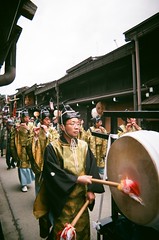
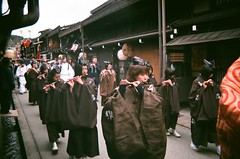
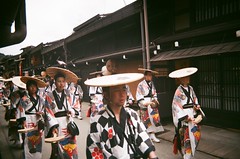
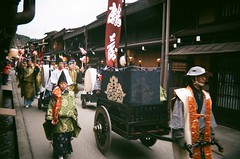
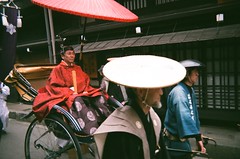
On the afternoon of the 14th, the procession including mikoshi(portable shrine), people in historical costumes, performers, musicians starts from the Hie Shrine and arrives at the Otabisho(御旅所). Otabisho is a rest house for the god or place where the sacred palanquin is lodged during a festival. On the afternoon of the 15th, the procession returns to the shrine.


Festival parade by robertpaulyoung /flickr
"
Mikoshi(portable shrine) at the autumn festival


Festival parade by robertpaulyoung /flickr


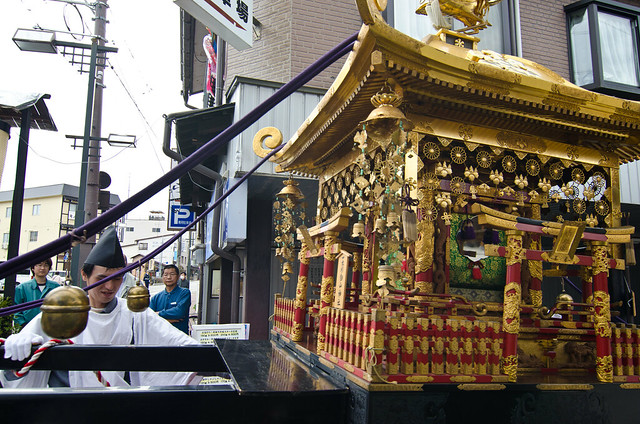
Mikoshi(portable shrine) at the spring festival

Festival parade by robertpaulyoung /flickr

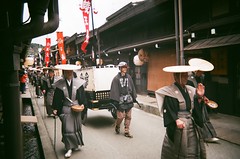
Spring Festival Parade by pauldesu.com /flickr


Spring Festival Parade 
by pauldesu.com /flickr
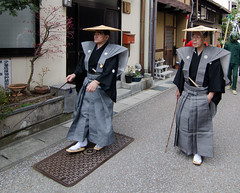
Men in kamishimo(裃) which was a kind of formal kimono for samurai in the Edo period.


Takayama Festival by Yuya Tamai /flickr

Kamishimo is the combination of a sleeveless jacket called 'Kataginu' and trousers(or skirt) called 'Hakama'. They are wearing kamishimo over a kimono.


Festival parade by robertpaulyoung /flickr

Tokeiraku(闘鶏楽) :

Tokeiraku(闘鶏楽) literally means cockfighting music. People dressed as chickens dance while ringing bells.


Festival parade 
by robertpaulyoung /flickr

 Tokeiraku(闘鶏楽)


Festival parade by robertpaulyoung /flickr

Lion dance(獅子舞)


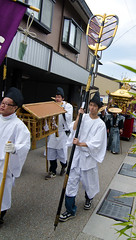
the procession

Spring Festival Parade 
by pauldesu.com /flickr

Festival parade by robertpaulyoung /flickr


Takayama Festival 
by Yuya Tamai /flickr


Takayama Festival by Yuya Tamai /flickr


Takayama Festival by Yuya Tamai /flickr


Takayama Festival by Yuya Tamai /flickr


Takayama Festival by Yuya Tamai /flickr


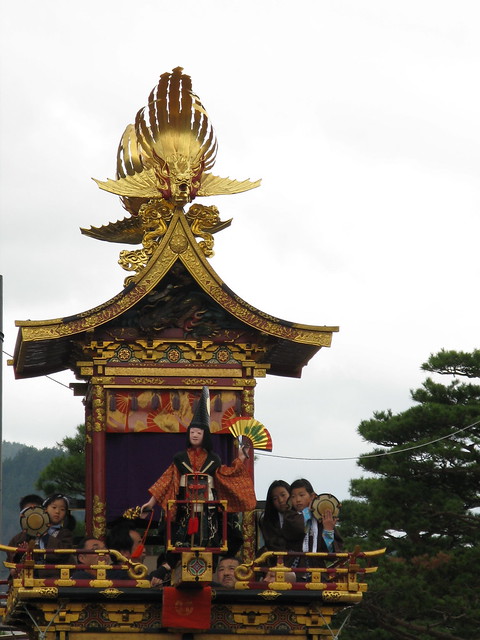
The festivals feature spectacular festival floats: 12 floats at the spring festival, and another 11 floats at the autumn festival. The float is called yatai in Takayama. It's also called "Moving Yomeimon(陽明門, a gate of Toshogu in Nikko)" because of its gorgeousness.

Four of 12 floats are drawn to the plaza in front of Otabisho on the 14th and the 15th. The main feature of the Sanno festival is marionette shows performed on three of them on the 14th and the 15th. Five or six puppeteers in the float move marionettes on the float by manipulating 20-30 strings twice both in the morning and the afternoon.

It is said that the first float in Takayama appeared at the Hachiman Festival in 1708. At the Sanno Festival, the first float appeared around 1751. Most of the floats appearing in the festivals were made in the Edo Period and were repaired a few times.

Marionette performance
Marionette performance by robertpaulyoung /flickr


IMG_5510 by chinogypsie /flickr
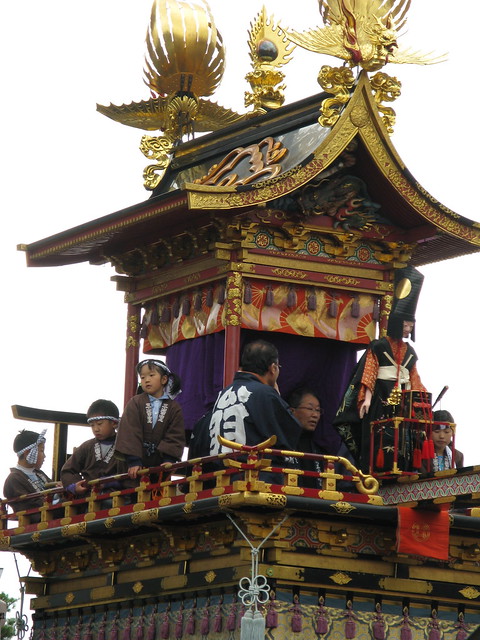
 Sanbaso(三番叟) float with a marionette at the spring festival


1) Sanbaso doll takes a bell for Kagura with his right hand and a fan with his left hand.

2) He looks up after putting his head over a box.

3) He is wearing the mask of Okina(old man) . He performs a noh dance.


IMG_5491 by chinogypsie /flickr

Syakkyotai(石橋台) float with a marionette at the spring festival

1) A woman dances with a folded fan in her hand. 

 
Marionette performance
Marionette performance by robertpaulyoung /flickr

 
Marionette performance by robertpaulyoung /flickr

2) The woman turns into a lion and performs the lion dance.


 3) The lion turns into the woman again.


Ryujintai(龍神台) float with marionettes at the spring festival

1) A karako(Chinese child) appears with a pot.

Marionette performance
Marionette performance by robertpaulyoung /flickr

Marionette performance
Marionette performance 
by robertpaulyoung /fllickr

 2) Red-faced Dragon God appears out of the pot while scattering confetti.


Other floats are drawn to Kawahara-machi on the 14th, and to Hon-machi and the Sanmachi Street on the 15th.
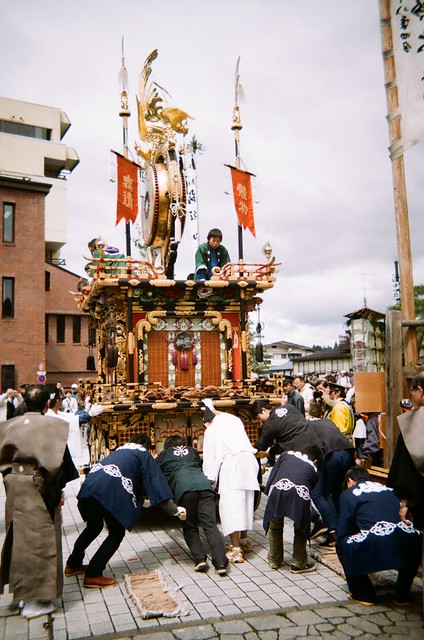
Takayama Festival by Yuya Tamai /flickr
Kaguratai(神楽台)


Kaguratai(神楽台) is the head of the floats. A Japanese dram is placed on the float.


A float named Hoteitai(布袋台) was made around 1718. This float appears in the autumn festival.  Each of two Chinese children makes a jump from one bar to another. Then each makes a jump from the fifth bar onto the shoulder of Hotei(布袋). They perform a spectacular feat.  Hotei was modeled on a Chinese monk.
 
Hotei. YOU BASTARD. by dean blackburn /flickr
(A Chinese child is standing on the left shoulder of Hotei)

 
Festival float 
by robertpaulyoung /flickr
Seiryutai(青龍台)

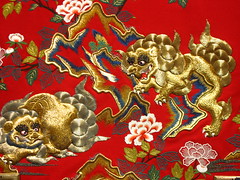
embroidery on festival cart 
by randomidea /flickr
(Japanese famous painter Maruyama Okyo(円山 応挙,1733-1795) drew a rough design for this embroidery on Gotaisan(五台山)  float.)


takayama11 by Flowizm /flickr
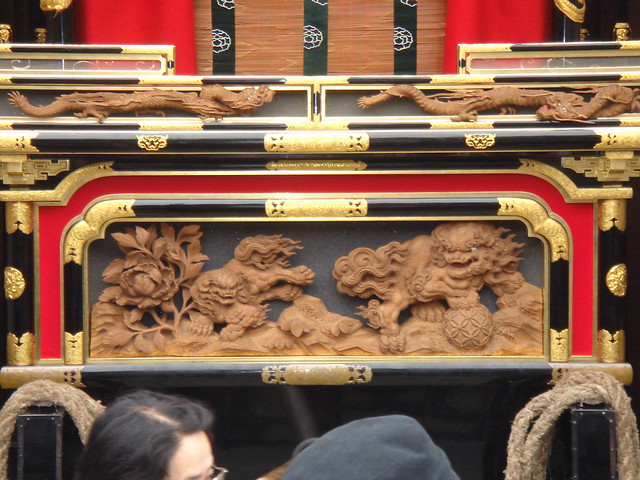
(sculpture of Syakkyotai made in 1865)


Festival float by robertpaulyoung /flickr
(sculpture of  Ryujintai(龍神台) made in 1968)

The festival floats have exquisite wood sculptures on them. 
As Hida area only had poor soil, its residents couldn't pay tribute such as rice, local products to the Imperial Court. Instead, tax was paid in the form of labor. Hida was a mountainous area, so many woodsmen and carpenters lived there.


Festival float by robertpaulyoung /flickr
(sculpture of Ebisutai made in 1848)


Around 100 young men were engaged in construction work in Nara or Kyoto every year for about 500 years. They acquired excellent woodworking skills, and they gained a greater reputation from the 8th to the 9th centuries.


Festival float by robertpaulyoung /flickr
(sculpture of Kirintai(麒麟台) made in 1845)

Hida was under the direct control of the Edo Shogunate in 1652. Local governors from the shogunate administered the affairs of state at Takayama Jinya(高山陣屋).

Hida has little suitable land for cultivating rice. Most of suitable land for cultivating rice was sold under foreclosure to wealthy merchants. They made a great fortune by lending money to farmers, woodsmen, even feudal lords. Common people were besieged by a serious famine and lived in dire poverty. The local governors often misallocated rice for the residents. A large-scale peasants'revolt continued for about 20 years in the Edo Period.

Meanwhile, the wealthy merchants paid a lot of money for infrastructure building and rescued needy persons in a flood disaster and famine. Some people say that they put their efforts into making gorgeous floats to focus people's attention on the festivals.
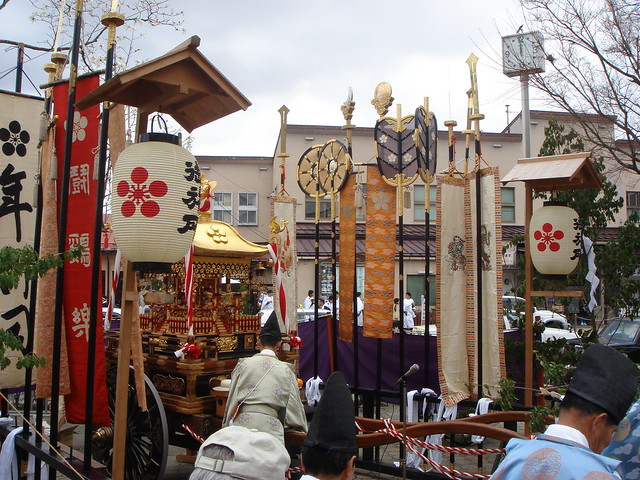
takayama1 by Flowizm /flickr

Takayama by robertpaulyoung /flickr


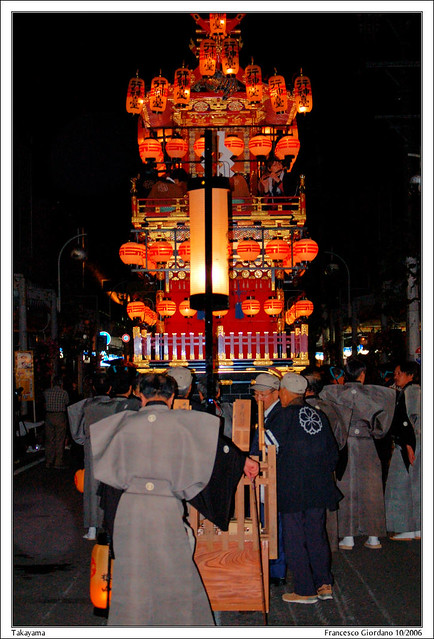
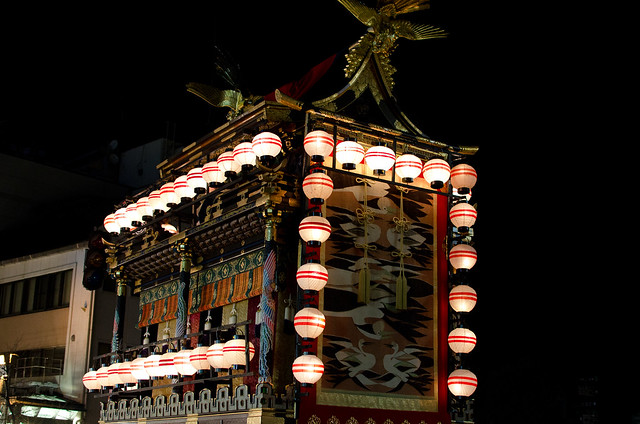
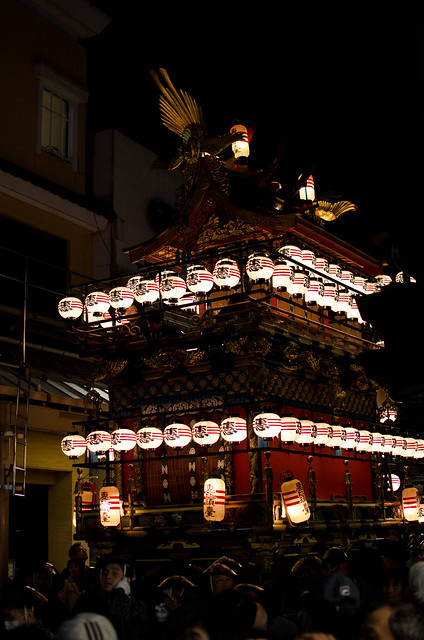
On the night of the 14th, each float is spectacularly decorated with around 100 lanterns.


Float procession by robertpaulyoung /flickr
Seiryutai(青龍台) at the spring festival


031_takayama07 by Francesco_G /flickr
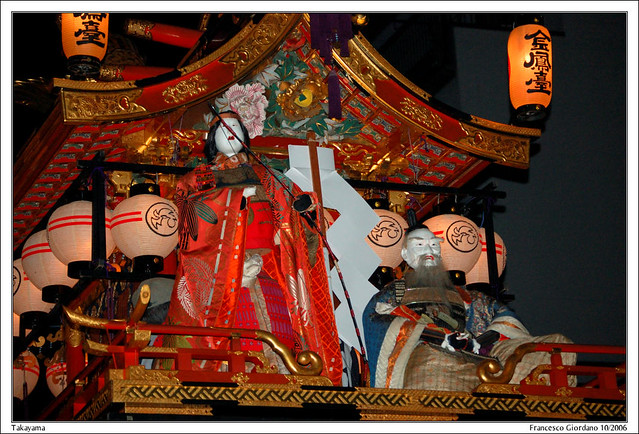
Kinpotai(金鳳台) at the autumn festival


Takayama by Francesco_G /flickr
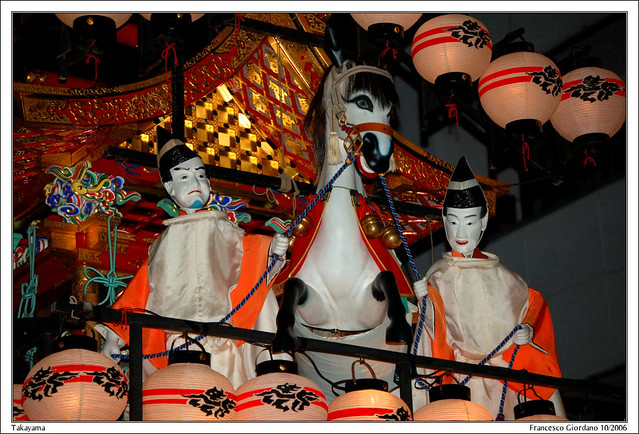
Jinma-tai(神馬台) at the autumn festival


Takayama by Francesco_G /flickr
Gyojintai(行神台) at the autumn festival


Takayama Spring Festival by pauldesu.com /flickr
Hootai(鳳凰台) at the spring festival on April 14


Takayama Spring Festival by pauldesu.com /flickr
yataigura for Ebisutai(恵比須台)


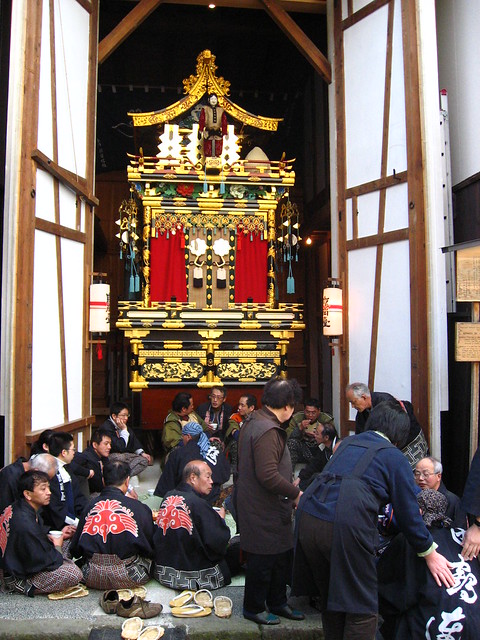
Yataigura(屋台蔵, storehouses for the festive floats)

Float store house
Float store house by robertpaulyoung /flickr

There are several dozo(土蔵) storehouses for the festive floats in Takayama. Dozo are traditional Japanese architectural structures with outer walls made of mud and finished with plaster. They are highly fire‐resistant. After the great fire in 1833, dozo storehouses for the floats were built one after another. Dozo are still protecting the floats from a fire.
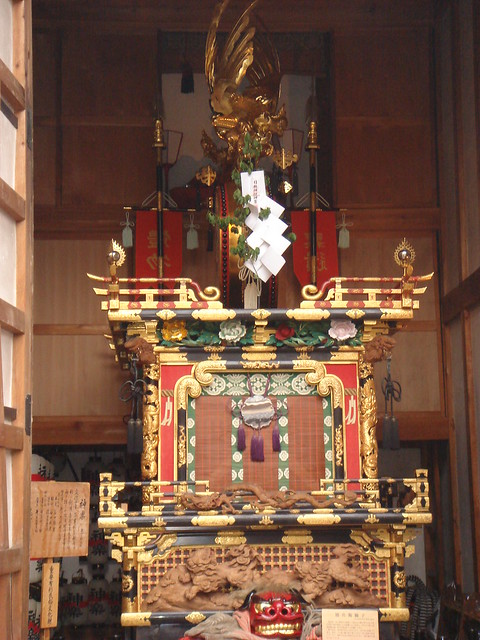


takayama9 by Flowizm /flickr
yataigura for Kaguratai(神楽台)


festival cart caretakers relax 
by randomidea /flickr
yataigura for Konkotai(崑崗台)


Friday, April 12, 2013

The fifth-generation Kabuki-za Theater

Nothing happened today. I pray tomorrow will be the same.


R0024620
R0024620 by urasimaru /flickr

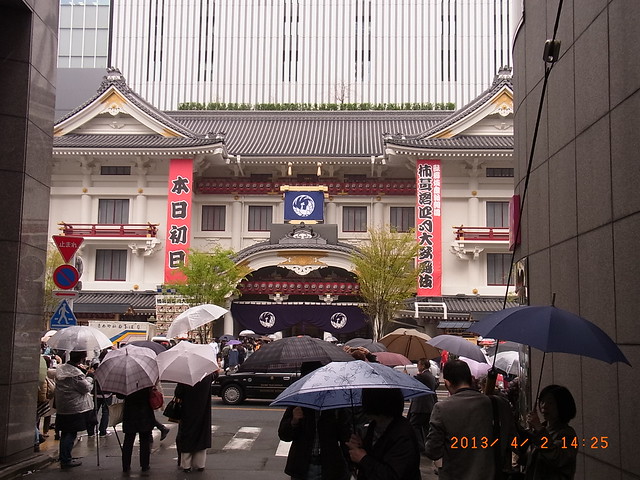
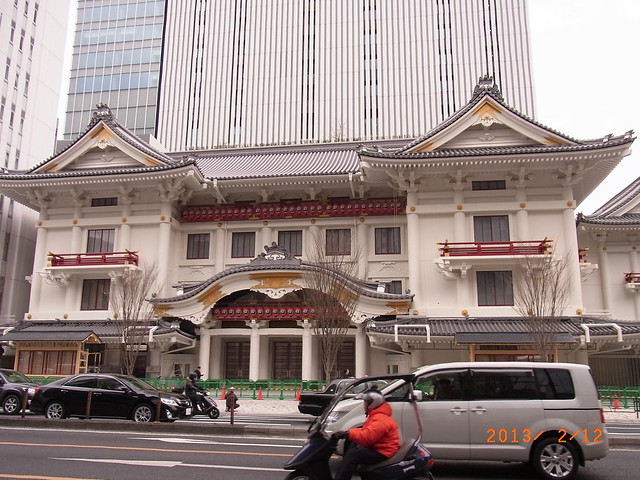
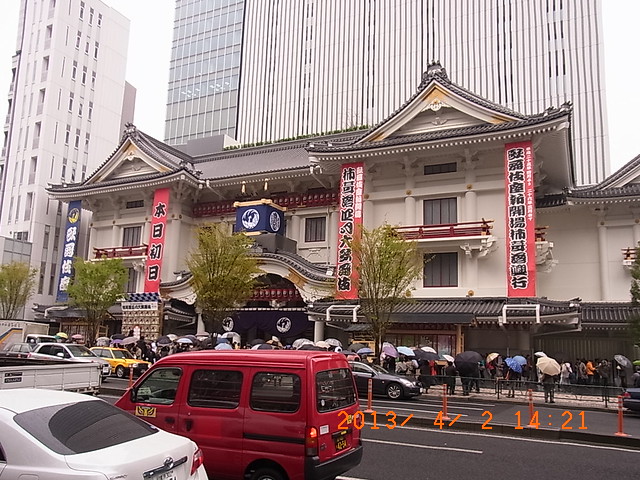
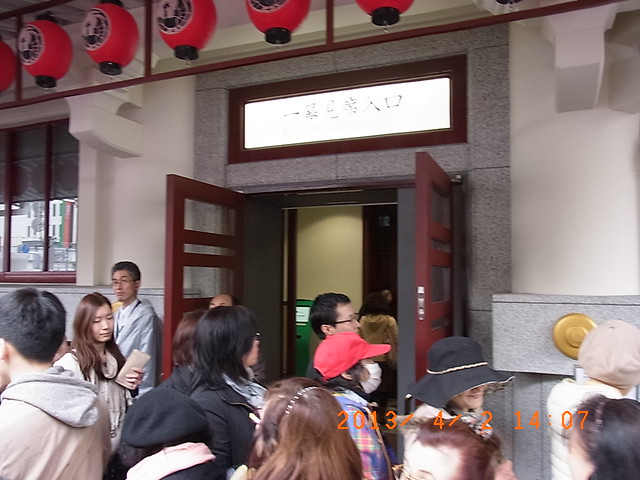
The fifth-generation Kabuki-za Theater reopened on April 2. It rained on the opening day.  The Doors opened with the beating of a drum.


Kabuki-za
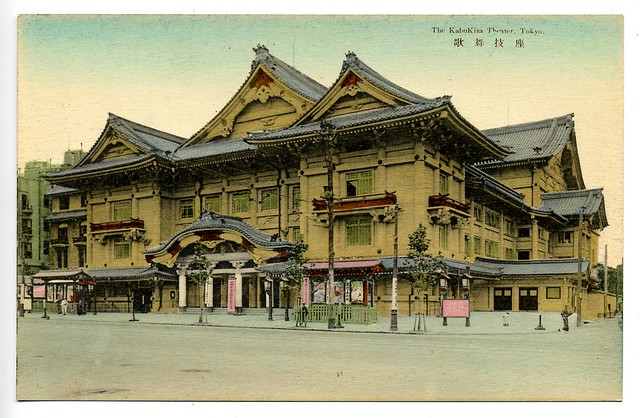
Kabuki-za by knhiraoka /flickr(the former kabuki-za)


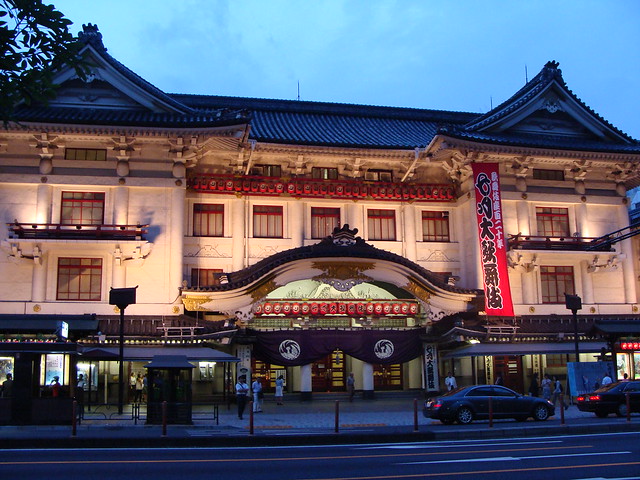
Its appearance is left in its original state. Its first generation building was built in 1889.


information about kabukiza:
http://www.kabuki-bito.jp/eng/contents/theatre/kabukiza.html
http://www.kabuki-za.co.jp/

Kabukiza Theater, Ginza, Tokyo
Kabukiza Theater, Ginza, Tokyo by born1945 /flickr

Kabuki is said to have originated from "IZUMO no Okuni," a female traveling dancer. She delivered a performance at Kitano Tenman-gu Shrine in 1603. As she became popular, many imitators including prostitutes and teenage boys appeared. Since they were accompanied by male/female prostitution and other undesirable activities, then government banned women performers in 1629, and teenage male performers in 1652.


R0023863
R0023863 by urasimaru /flickr

Some theaters for kabuki performances used to be located at Ginza around 1660. Successful Edo Period businessmen of the fish market were patrons of kabuki players such as the Ichikawa family. Kabuki-za is close to Tsukiji and Ginza. The audience can enjoy the fish market at Tsukiji, and shoppings or dinner at Ginza.


April Kabuki Program for Grand Opening of Kabukiza Theatre is being held from April 2 to 28.

The theater was rebuild because the building became too old and have poor earthquake resistance strength, and its facilities are not yet barrier free.  A writer was seeing a kabuki play at an another theater on March 11 in 2011. She said that the large earthquake might have caused casualties if a kabuki play had been performed at the former kabukiza theater.

R0024616
R0024616 by urasimaru /flickr


R0024077 by urasimaru /flickr


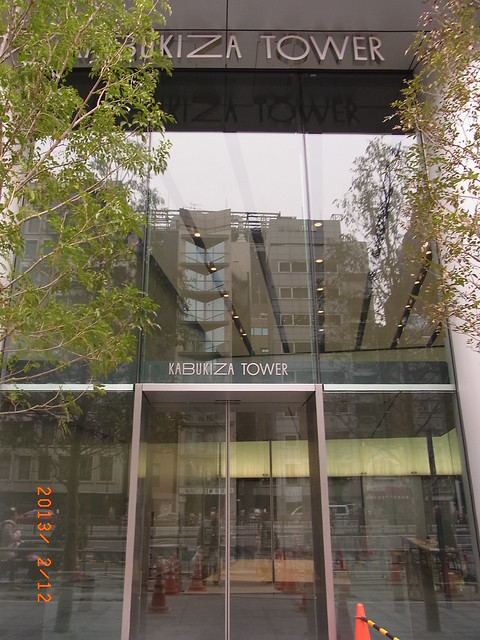
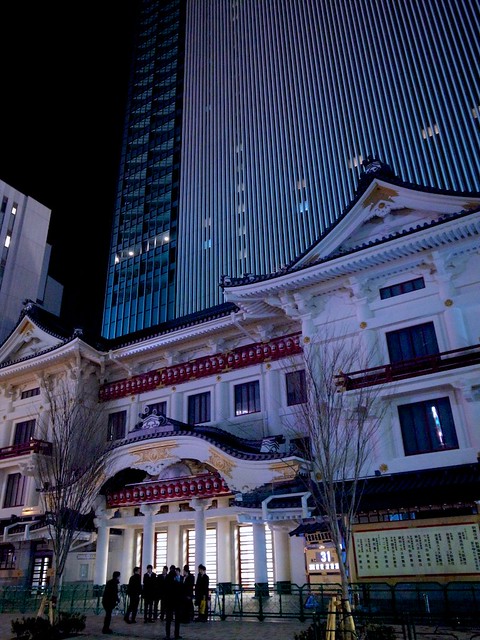
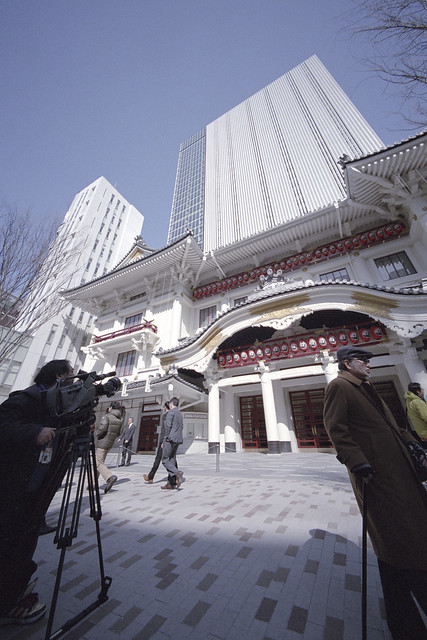
The Kabukiza Tower, a 29-story office building, stands behind the theater.

Bunraku would not survive without government subsidies. In contrast, the subsidies are not used for kabuki performances. The subsidies are used to train kabuki successors.


However, those involved have a sense of crisis about the future of kabuki. Regulars are aging. They expect to secure a stable source for business income by getting office rents.


R0023891
R0023891 by urasimaru /flickr


R0024618
R0024618 by urasimaru /flickr
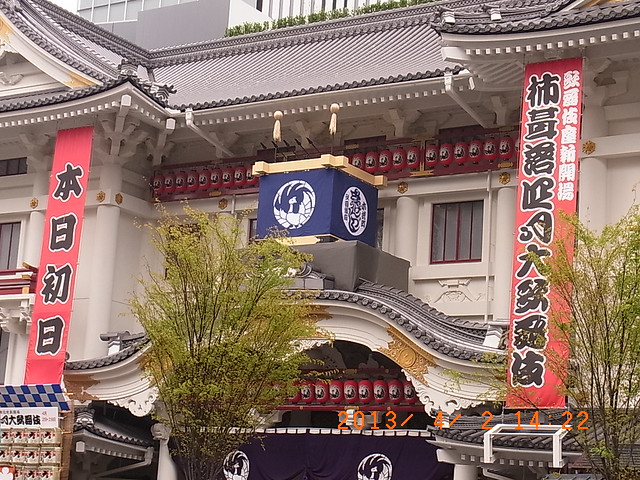
(Kabukiza Theater with banners and yagura)
 Kabukiza Theater with banners saying "Today is the opening day" and "April Kabuki Play for Grand Opening of Kabukiza Theatre"

Yagura is a wooden cubic frame covered with blue cloth on which is dyed a large pattern of the theater's crest "hoo (鳳凰, mythological sacred bird in Chinese lore, Chinese phoenix) ."  In the Edo Period, only playhouses authorized by the feudal government could put yagura up. Yagura will remain there until next March.


R0024602
R0024602 by urasimaru /flickr
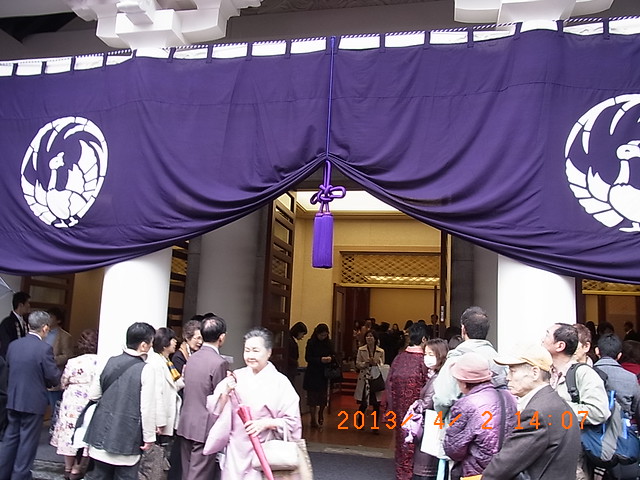
(main entrance)

The audience can have a meal at the restaurants in the theater, but reservations are recommended. The audience can eat box lunch in their seats.  Japanese boxed lunch are available at the lunch box shop on the second basement of the tower and at the drink stands on the 1st, 2nd, third floor of the theater.


In the second basement of the tower, there are a soba shop, a grocer's, a lunch box shop, a coffee shop, a convenience store, a souvenir shop, and kabukiza box office. A large space on the floor can be used as a temporary shelter for people who have difficulty returning home when a disaster strikes.


R0023869
R0023869 by urasimaru /flickr


subway entrance on the first floor

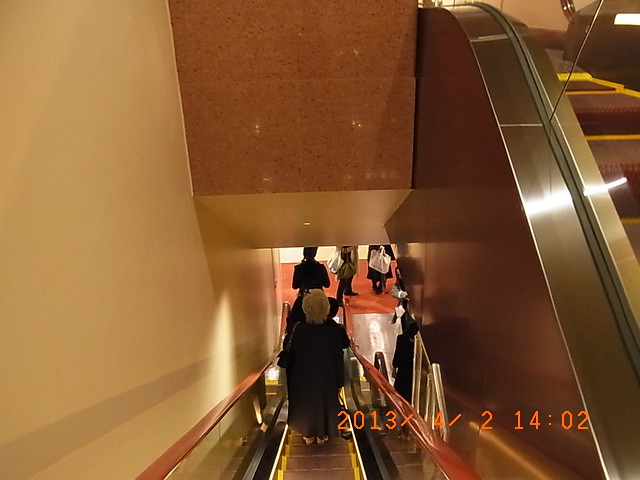
 After taking the escalator or elevator from the second basement of the tower to the first floor of the theater, the audience can enter the theater through the main entrance without wetting oneself.


R0024085
R0024085 by urasimaru /flickr


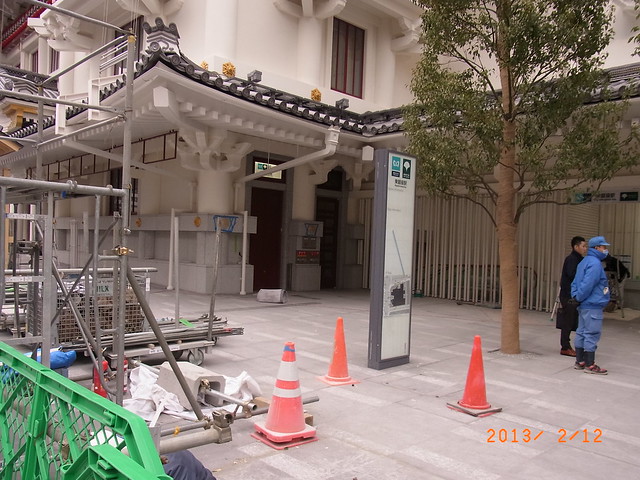
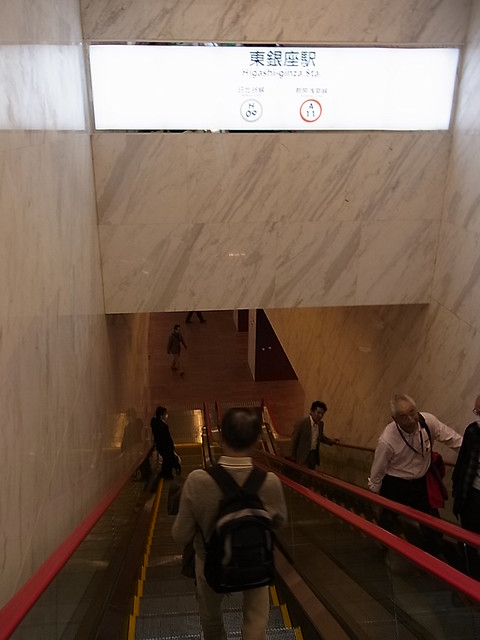
subway entrance

Higashiginza Station on the Tokyo Metro Hibiya Line and Toei Subway Asakusa Line has direct access to the second basement of the tower.


R0024595
R0024595 by urasimaru /flickr


a single-width escalator


The first basement of the theater has coin lockers.

On the first floor, there are audience seats, a souvenir shop, a coffee shop. It seems that the coffee shop is available for even non-audience ones.


R0024610
R0024610 by urasimaru /flickr
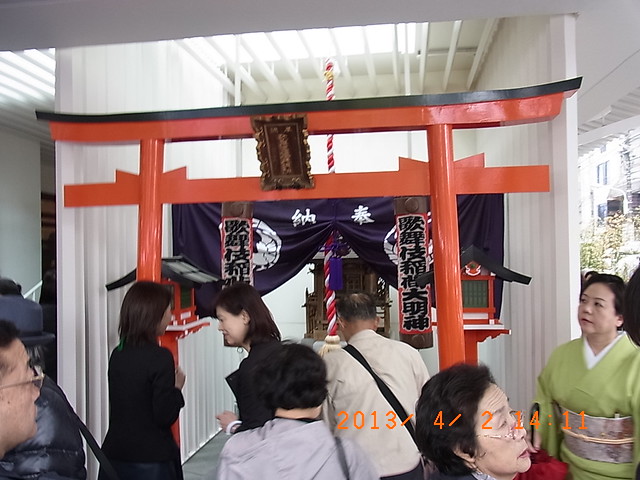
Kabuki Inari Jinja

There is a small shrine called Kabuki Inari Jinja(歌舞伎稲荷神社) near the escalator on the first floor.


R0024582
R0024582 by urasimaru /flickr


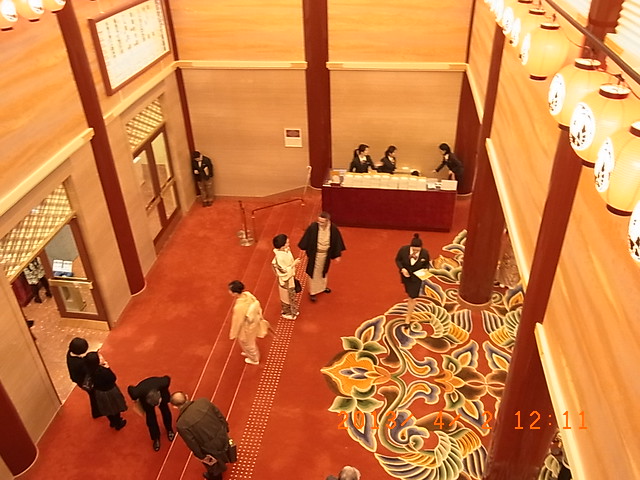
lobby covered with a hoo(Chinese phoenix) pattern carpet on the first floor


R0024576
R0024576 by urasimaru /flickr


Kabuki connoisseurs on the third floor call out with precise timing such as "Naritaya!(the actor's hereditary stage name)","Matte-mashita!(We've been waiting for you!)." They do to liven up the play. If someone calls out with bad timing, one would spoil the play.
 

R0024578
R0024578 by urasimaru /flickr

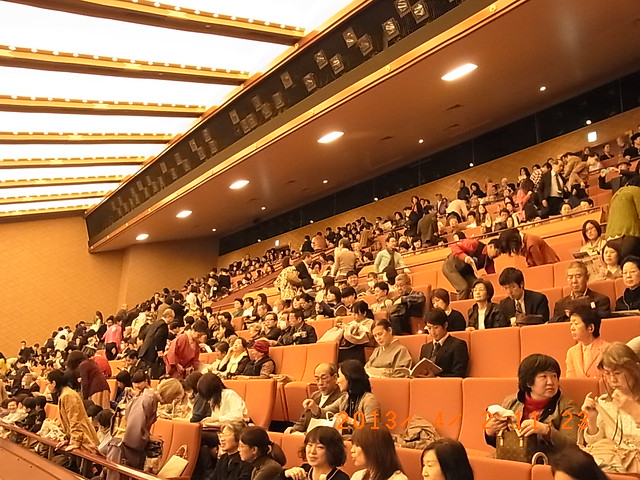
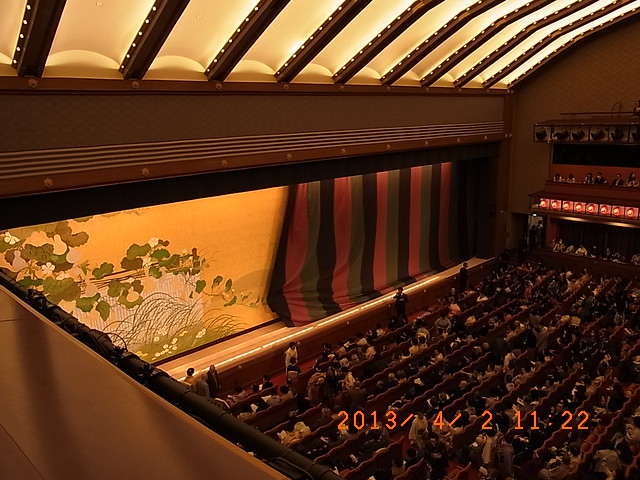
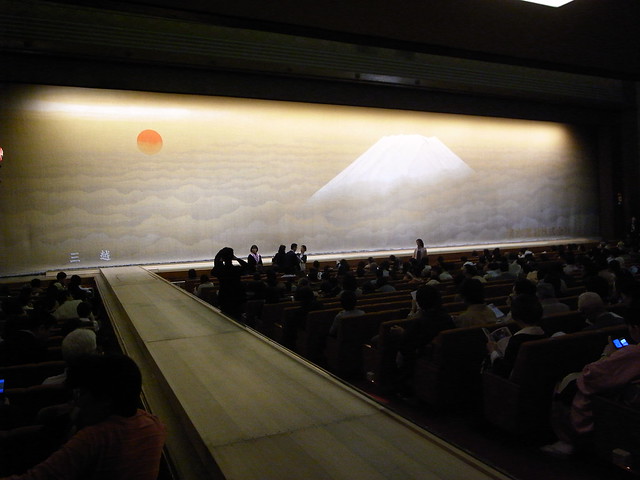
The seats on the 1st and 2nd floor became more spacious than before. Some new stage settings have been installed.


R0024577
R0024577 by urasimaru /flickr


R0026340
R0026340 by urasimaru /flickr


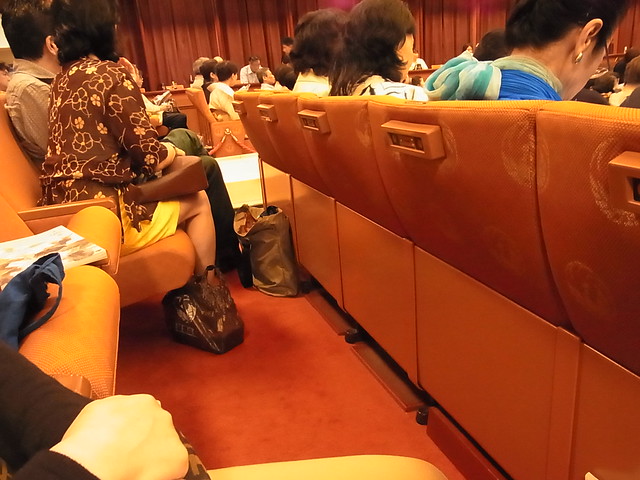
The audience can rent portable video monitors on which the lines and the explanation of the scenes are displayed. Holders for the monitors are installed on the back of the front seat backrests.

R0024594
R0024594 by urasimaru /flickr


歌舞伎座 Kabukiza
歌舞伎座 Kabukiza / na0905 /flickr
(hanamichi at the former kabuki-za)


Hanamichi is like a runway in fashion show. Main actors often enter and exit via the hanamichi acting. The audience seated close to the hanamichi can almost reach out and touch the actors when they appear along the hanamichi. Some people say that several seats have trouble seeing the play or hanamichi.


R0024614
R0024614 by urasimaru /flickr
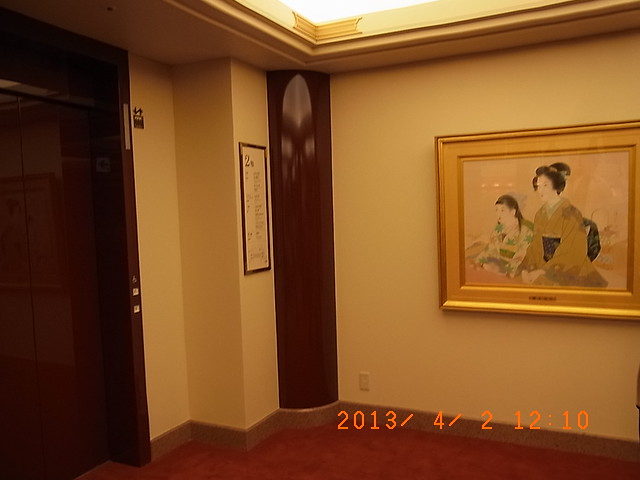
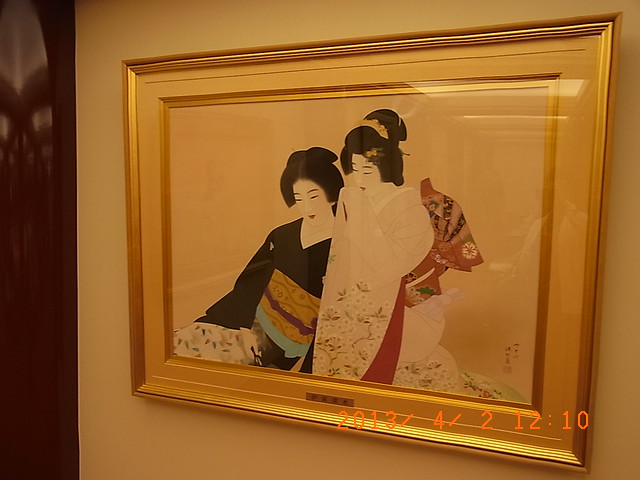
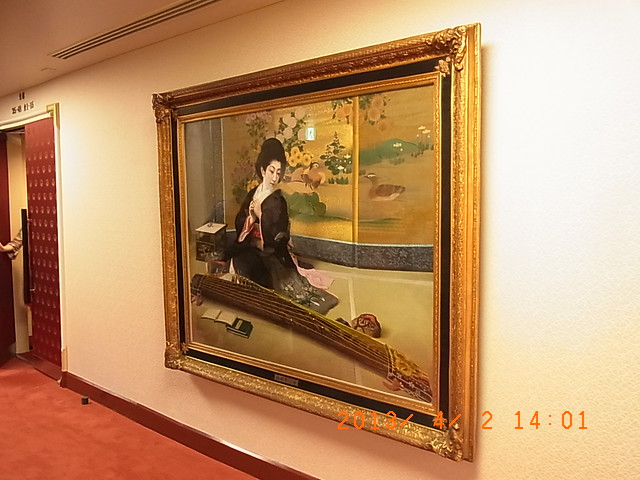
On the second floor, there are audience seats and a restaurant. The floor has several paintings by Japanesd famous artists including Kaii Higashiyama(東山魁夷), Shinsui Ito(伊東深水), Shoen Uemura(上村松園),Yukihiko Yasuda(安田靫彦), Gyoshu Hayami(速水御舟) on the wall. The theater's VIP room and reception room have some valuable paintings, but the public can't see them.


R0024580
R0024580 by urasimaru /flickr

Sajiki(さじき, box-seat) by Kiyokata kaburaki(鏑木清方) around 1945


R0024583
R0024583 by urasimaru /flickr


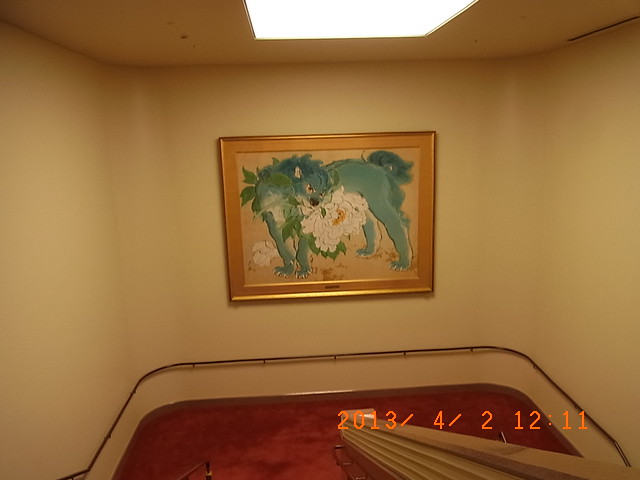
Aojishi(青獅子, blue lion) by Ryushi Kawabata(川端龍子) in 1950

R0024581
R0024581 by urasimaru /flickr


Shunsyo(春宵, spring evening) by Shinsui Ito(伊東深水) in 1950


R0024592
R0024592 by urasimaru /flickr


Sazanka no Tsubone(山茶花の局(美人弾琴図), Lady Sazanka) by Shiichi Kamei(亀井至一) in 1890


On the third floor, there are audience seats, restaurants, souvenir shops.

On the fifth floor, there is a rooftop garden. Visitors can also enjoy free admission to the garden. The garden has a stone lantern that Kawatake Mokuami(河竹黙阿弥, 1816-1893), a dramatist of Kabuki, owned. The garden has direct access to the fifth floor of the Kabukiza Tower.

On the tower's fifth floor, there are Kabukiza Theater Gallery, an exhibition space, a small event hall, a photo studio, a souvenir shop, a Japanese tea shop.  The gallery shows stage costumes, set and props for kabuki plays. Events will be held by participators including young kabuki actors, the players of traditional Japanese music at the hall. At the photo studio, a photographer shoot pictures of visitors wearing costumes, makeup and hair for kabuki plays.


R0023872
R002387 by urasimaru /flickr
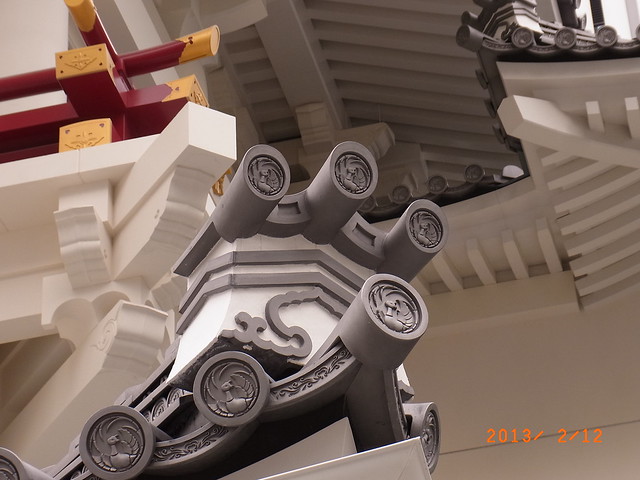
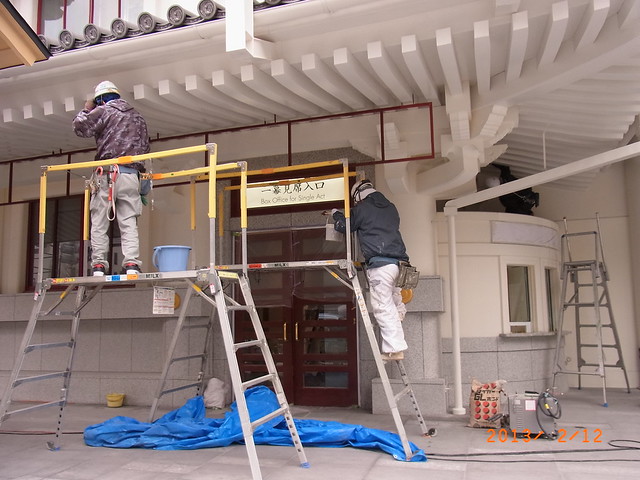
 Visitors can come down Goemon staircase from the fifth floor to the entrance for single act on the fourth floor of the theater. The roof tiles of the theater depict a Chinese phoenix. Only one phoenix is looking in opposite direction to other ones. Some say its finders would be happy.


R0023881
R0023881 by urasimaru /flickr
(box-office for single act)

In the program of this month, the tickets cost from 22,000 yen to 4,000 yen.

Although seats for a single act(一幕見席, hitomakumiseki) cost 2,000 yen, the tickets for the seats are sold only on the day and cannot be reserved in advance. The seats include 96 seats and 60 standing seats.


R0024603
R0024603 by urasimaru /flickr
(box-office for single act on April 2)

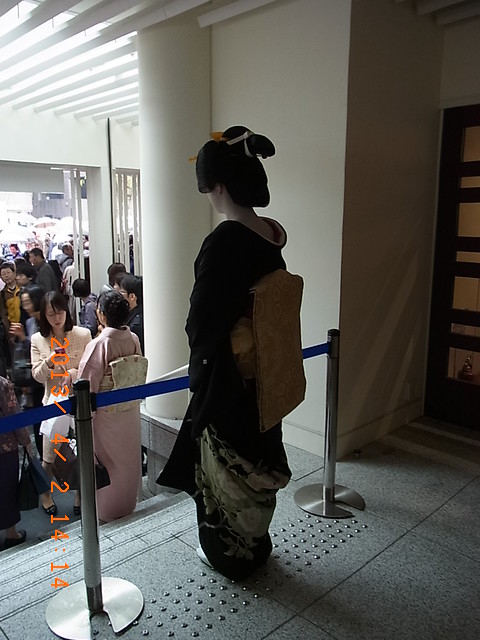
Many people line up to buy the tickets at the box-office for single act on the 1st floor of the theater. Earphone guides(Japanese and English version) are also available to the audience in the seats. The audience can use only a doorway leading into their seats on the fourth floor, and they are unavailable for restaurants and shops on the other floors of the theater.


歌舞伎座
歌舞伎座 by mxmstryo /flickr


A lot happened after the closing ceremony of the theater was held on April 30 in 2010.

In November, 2010, Ichikawa Ebizo XI(市川海老蔵) fractured his zygoma and a front tooth because of a violent incident during drinking.

In January, 2011, Nakamuara Tomijuro V(中村富十郎) died at the age of 81.
In October, 2011, Nakamuara Shikan VII(中村 芝翫) died at the age of 83.
In February, 2012, Nakamuara Jakuemon IV(中村 雀右衛門) died at the age of 91.


歌舞伎座 第5期 竣工式取材中 1
歌舞伎座 第5期 竣工式取材中 1 by fukapon /flickr

On August 27 in 2012, Ichikawa Somegoro VII(市川染五郎) got whacked in the right side of the body and fractured his right wrist after he fell three meters into a trap cellar from the stage while dancing at the dance performance to celebrate the 70th anniversary of his father's birth. His father, Matusmoto Koshiro IX(松本幸四郎), said afterward that he prepared for the worst. The trap cellar under the stage or runway of a theater is called Naraku(奈落) in Japan. Naraku comes from Diyu (Sanskrit: "Naraka") which means "hell."

On December 5 in 2012, Nakamuara Kanzaburo XIII(十八代目 中村 勘三郎) died at the age of 57.
On February 3 in 2013, Ichikawa Danjuro XII(十二代目 市川 團十郞) died at the age of 66.

On February 26 in 2013, Onoe Kikunosuke V(尾上菊之助) married the fourth daughter of Nakamura Kichiemon II(中村吉右衛門) at the Kanda Myojin Shrine in Tokyo.

On February 26 in 2013, a ceremony to celebrate the completion of Kabukiza was held on the 29th floor of the Kabukiza Tower.

On February 27 in 2013, the funeral of Ichikawa Danjuro was held in light rain. In the case of funerals of some celebrities, a private funeral is observed first and then later a formal funeral is held. Many people came to convey their condolences. Unlike his son, he is said to have been a person of depth.

On March 22 in 2013, Ichikawa Ebizo's wife gave birth to a baby boy. Danjuro couldn't see the baby , but he knew that his grandson would come into the world. The baby is expected to follow his father and his grandfather in the family business.

  On March 27 in 2013, about 120 people including 63 kabuki actors paraded down the street of Ginza. They were attired in traditional family crest-bearing kimono and hakama(pleated skirt).  Despite the cold rainy weather, about 32,000 people filled the streets along the 400-meter route to catch a glimpse of the newlyweds.
People dressed as civil firemen in the Edo period led the procession while singing a kiyariuta(song for carrying heavy logs) and waving firefighters' banners. They are the members of a society for the cultural preservation of volunteer fire companies in the Edo Period.

On the afternoon of March 27 in 2013, the inauguration ceremony of the Kabukiza Theater was held at the theater. It was an invitation-only event. After a festive program was performed, 99 kabuki actors were in line on the stage. Some representatives address the audience, and all of them clapped their hands to celebrate the newborn Kabuki-za.

On March 28 in 2013, the ceremony of teuchi (Japanese custom of ceremonial rhythmic hand clapping, performed at a special event) was held at the theater. the ceremony is normally closed, but invited guests attended it this time. Usually only performers and theater officials attend this ceremony.